Testing page for app
-
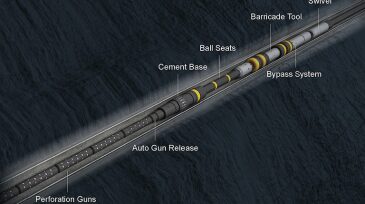
 Archer’s Stronghold Barricade well decommissioning system leaves the casing in place, while perforating, washing, and cementing the annulus to create a cement barrier in a single trip.
-
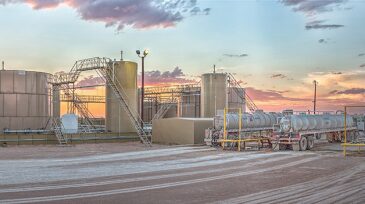
Rising oil production in the Permian Basin has created an opportunity for midstream companies to acquire and expand pipeline infrastructure to handle a predicted spike in produced water.
-
Technical Directors have a range of things to work on for 2018 that add value at a time when resources are scare.
-
Cyberattacks are an increasing threat globally to businesses and organizations, very much including the oil and gas industry, with operating activity of all kinds exposed as well as information technology networks.
-
Nonaqueous drilling fluids have been used extensively by the industry, particularly in complex drilling scenarios. They carry some concerns, however, with implications for well integrity.
-
Managed-pressure drilling (MPD) challenges the conventional drilling paradigm, along with drilling-contractor and operator policies and standards. Conventional drilling practices for connections, flow checks, tripping, and well control have been long understood and standardized.
-
In this study, pressure-while-drilling technologies are combined with software simulations to differentiate drilling-fluid thermal expansion, wellbore ballooning, and formation influx during riserless drilling operations.
-
There is a growing awareness that maximizing field production involves not only having a clear understanding of subsurface intricacies but also ensuring that existing surface facilities are performing at their best to handle production in an environmentally safe manner.
-
Fields in the Upper Assam-Arakan Basin have been studied intensely to find prospective sweet spots, perforation intervals for new wells, and potential workover candidates. These forecasts, guided only by dynamic-numerical-model results, have had mixed results when implemented in the field.
-
In this paper, an integrated work flow is proposed for brownfields where oil production is driven mainly by water injection. Produced-water salinity plays a key role, acting as a natural tracer and, thus, helping avoid additional costs for new data acquisition.