Testing page for app
-
 In this paper, after a review of the fundamentals of wettability alteration, a discussion of nanomaterials used for wettability alteration is provided.
-
This paper details the experience of using new stabilized crosslinked-fracturing-fluid systems in the Permian Basin using borated produced water.
-
This paper discusses aspects of water logistics necessary during the well-completion phase, fracture-treatment designs applied in Vaca Muerta, and laboratory studies performed on flowback and produced water to help evaluate the potential for water reuse.
-
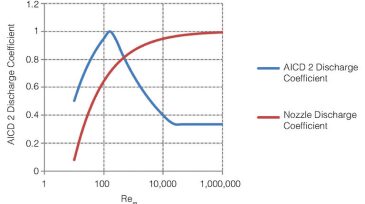
Several designs for autonomous inflow-control devices (AICDs) are available. The comparative properties and abilities of these designs are the focus of this paper.
-
Advances in technologies for production and facilities are being driven by the development of unconventional resources and the need for more-efficient and -reliable operations.
-
Rising demand for flowback technologies to reduce uncertainties is leading to the creation of more hydrocarbon and water tracers. These chemical-based tracers may play an important role in the shale industry’s effort to come up with more cost-effective fracture designs.
-
An area of great interest to those researching flowback is the interaction of water and salt inside the shale reservoir. After a well is stimulated, the flowback fluids tend to show a rising concentration of salt that falls back to near zero over time.
-
On the far end of the flowback spectrum is a completion process called soakback. If the well has to be shut in until takeaway capacity is available, the completion fluids soak into the shale rock. Flowback analysis can help understand what happens in the formation.
-
Most shale producers in North America have given little thought to the flowback stage following hydraulic fracturing. Others have come to realize it represents a valuable opportunity to learn more about their wells.
-
Researchers at Yale University who analyzed groundwater wells in the Marcellus Shale area have determined that hydraulic fracturing is highly unlikely to be a direct source of contamination.