Testing page for app
-
 Digitalization and automation were key topics in the panel and technical sessions at this year’s Offshore Technology Conference as the iconic event celebrated its 50th anniversary.
-
As the country pushes for higher output from its emerging unconventional sector, nature is pushing back. To get better results, operators there are increasing their reliance on technology.
-
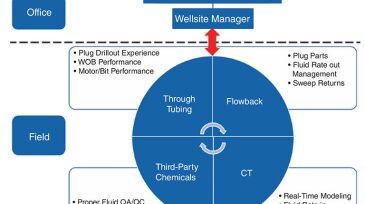
This paper presents a factory-model approach to improving CT drillout performance that has been used successfully for more than 3 years and has become standard practice.
-
The coiled-tubing (CT) industry, like other well-intervention segments, has applied lean philosophies to some aspects of its management, operations, processes, and equipment. When it comes to CT application to specific in-well operations, no two wells are the same.
-
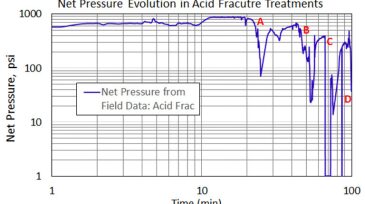
This paper contains a detailed discussion of methods and a software tool that has been developed to generate information that predicts formation-face pressures in real time with the help of live bottomhole-pressure data.
-
The fourth industrial revolution is taking the oil and gas business by storm. Many companies have increased resources for big-data analytics and machine learning. Though no one sees physical oilfield services as in decline, development in these areas may take a back seat to artificial intelligence.
-
In this paper, the authors study the stress status of CT string held by gripper blocks, the axial force distribution of gripper blocks, and the longitudinal resonance of CT strings in vertical wells.
-
This paper discusses the advantages of the in-line quench-and-temper (Q&T) process, which enhances overall CT life and reliability by producing tubing with more-uniform microstructure throughout its entire length, increased material strength, and improved bend-fatigue performance.
-
The state-owned firm is looking within its home country, around Southeast Asia, and to the Americas—including shale—in an effort to maintain its forecast average yearly production of 1.7 million BOE/D over the next 5 years.
-
The chemical reactions creating buildups of scale that can clog a well can be replicated in a chemical lab, but researchers are finding many more variables on the surfaces of pipes that need to be considered.