

Latest News
-
 Malaysia’s Petronas, Shell Malaysia, and Thailand’s PTTEP are now in the midst of full-scale digital adoption. The companies are beginning to see results, but none is counting on a “big bang” in development of the technology soon.
 -
This paper presents a newly developed model to predict the breakdown pressures in cased and perforated wells.
-
This paper presents a unique work flow that addresses in real time the challenges of perforation and fracture-treatment design while accounting for the lithologic and stress variability along the wellbore and its surroundings.
-
A thermal asset in Oman is characterized by a large-scale steam-drive/cyclic-steam-soak development project, underpinned by extensive data gathering.
-
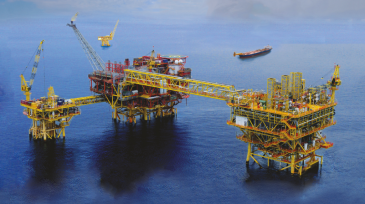
Norway’s oil and gas major, Equinor, made headlines in October 2018 following its launch of the world’s first fully automated wellhead platform, the Oseberg H. Here, Claudia Jarrett, US country manager of parts supplier EU Automation, explains the challenges of unmanned automation in oil and gas.
-
The chemical reactions creating buildups of scale that can clog a well can be replicated in a chemical lab, but researchers are finding many more variables on the surfaces of pipes that need to be considered.
-
The El Dorado, Arkansas-based Murphy has quickly found a home for some of the cash it will receive from the sale of its Malaysia business. The company has been rapidly expanding its US gulf footprint while simplifying its portfolio and targeting more oil.
-
The state-owned firm is looking within its home country, around Southeast Asia, and to the Americas—including shale—in an effort to maintain its forecast average yearly production of 1.7 million BOE/D over the next 5 years.
-
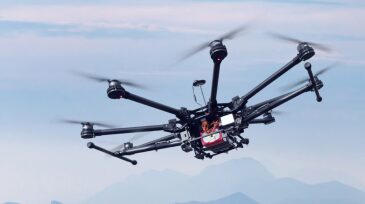
The American Petroleum Institute announced the publication of its Guide for Developing an Unmanned Aircraft Systems Program, which will help ensure worker and operational safety as the industry introduces drones in its operations.
-
The US Environmental Protection Agency recently finalized a voluntary disclosure program for new owners of upstream oil and gas facilities designed to encourage them to find, correct, and self-report violations of the Clean Air Act, in particular those associated with emissions from storage vessels.
-
The algorithms for running AI applications have been so big that they’ve required powerful machines in the cloud and data centers, making many applications less useful on smartphones and other edge devices. Now, that concern is quickly melting away, thanks to a series of recent breakthroughs.
-
This paper describes a path to general artificial intelligence (AI) (i.e., AI that is as smart or smarter than humans) based on the trend in machine learning that hand-designed solutions eventually are replaced by more-effective, learned solutions.





Explore Content by Discipline
Trending Content



Get JPT articles in your LinkedIn feed and stay current with oil and gas news and technology.