

Latest News
-
 The Gulf’s offshore wind future is no breezy affair as governments and industries must work together to meet lofty goals.
 -
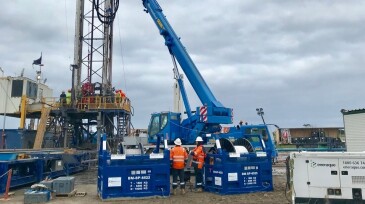
Glynn Williams, CEO of Silixa, offers his take on the role fiber-optic technology will play in the rise of CO2 storage and on the firm’s progress in the tight-rock sector.
-
This paper describes a novel distributed quasi-Newton derivative-free optimization method for reservoir-performance-optimization problems.
-
A North Dakota Supreme Court decision changed the rules for leasing pore space from landowners and their rights to compensation. This decision and the US Inflation Reduction Act, which significantly increases tax incentives for operators’ carbon capture and storage projects, is likely to spur other states to clarify their laws regulating pore space.
-
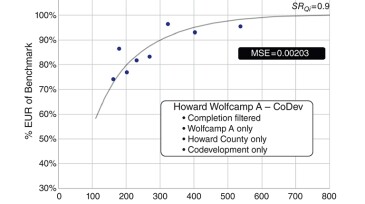
The complete paper builds on existing tools in the literature to quantify the effect of changing well spacing on well productivity for a given completion design, using a new, simple, intuitive empirical equation.
-
This paper describes a development plan for an oil field discovered in a remote offshore environment in the Niger Delta that uses a probabilistic approach to estimate the STOOIP using low, mid, and high cases.
-
The authors of this paper describe a project that integrates carbonate stratigraphic forward models of outcropping formations and reservoir-modeling work flows.
-
The Sustainable Development Technical Section has been selected to receive the 2022 Presidential Award for Outstanding Technical Section. The Flow Assurance and Hydraulic Fracturing technical sections have been awarded the 2022 Technical Section Excellence Award.
-
SPE has established three new technical sections—the Management Technical Section, the Methane Emissions Management Technical Section, and the Data Science & Engineering Analytics Technical Section.
-
The electrical submersible pump market is forecast to hit $6.7 billion in 2023.
-
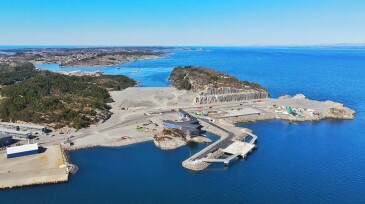
The two companies have agreed to develop a carbon capture and storage supply chain to funnel carbon dioxide produced by German industry into storage deep beneath the Norwegian Continental Shelf.
-
Sustainable aviation fuel is one potential path airlines can travel to mitigate aviation’s effect on the climate crisis. Shell is hoping to lead the charge for cleaner business travel.








Explore Content by Discipline
Trending Content


Get JPT articles in your LinkedIn feed and stay current with oil and gas news and technology.