

Latest News
-
 British armed forces forcibly boarded and regained control of an oil tanker in the English Channel on the evening of 25 October following a suspected hijacking, according to the UK defense ministry.
 -
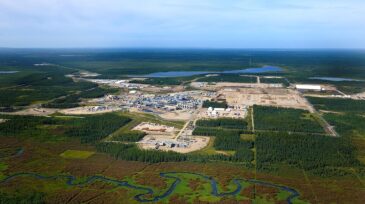
The Canadian oil company consolidation formula looks a lot like the one offered by US shale producers.
-
The data industry has gotten exceptionally good at building large, complex software systems. We’re now starting to see the rise of massive, complex systems built around data. Despite all of this, there is still a tremendous amount of confusion around what technologies are on the leading end.
-
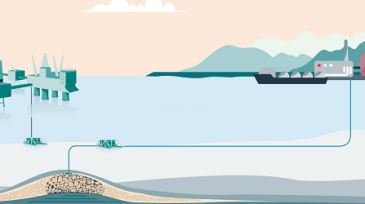
The Northern Lights project will disclose data sets from the confirmation Well 31/5-7 Eos drilled in the North Sea and completed earlier this year.
-
Work from home is the new normal. Digital tools have come to the rescue. The questions that is going around the industry is: Will the increased reliance on digital technologies in the workplace generate increased adoption of the digital transformation?
-
Addressing engineering or mechanical controls alone without addressing the human behavior at the center of operations in the energy industry limits process safety efforts to decrease serious incidents and fatalities.
-
An integrated advanced-analytics program is necessary to improve the performance and reliability of pumping systems.
-
The Petroleum Safety Authority Norway is worried about a rising number of serious incidents in the industry and has asked the companies to prioritize work on safety.
-
IPIECA, the global oil and gas industry association for advancing environmental and social performance, has scheduled a virtual workshop for 2 November to look at methane science, regulations, voluntary initiatives, and global expectations.
-
In an updated projection, Rystad said that a breakeven of only $50/bbl is needed to produce 100 million BOPD in 2025, reflecting the reduction in oil-production costs.
-
Primarily used in a few US states, waste-slurry-injection technology could help operators reduce cost, while also potentially reducing their carbon footprint. But the process may still present technical and environmental challenges.
-
New regulations have recently commenced with the effect that all onshore oil and gas exploration and production proposals involving hydraulic fracturing in Western Australia now will need to be referred to the Environmental Protection Authority for assessment.








Explore Content by Discipline
Trending Content



Get JPT articles in your LinkedIn feed and stay current with oil and gas news and technology.