

Latest News
-
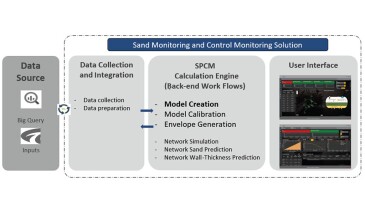
 The authors of this paper propose an automated approach to sand prediction and control monitoring that improved operational efficiency by reducing time spent on manual analysis and the decision-making process in a Myanmar field.
 -
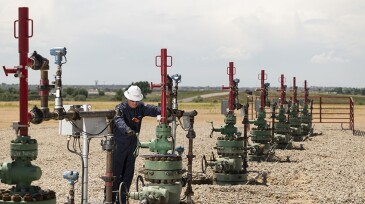
The authors of this paper present an artificial-lift timing and selection work flow using a hybrid data-driven and physics-based approach that incorporates routinely available pressure/volume/temperature, rate, and pressure information.
-
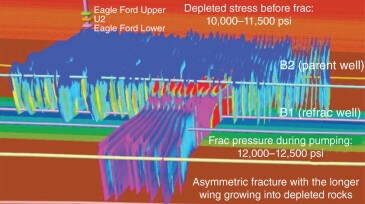
This paper focuses on characterization of fracture hits in the Eagle Ford, methods to predict their effects on production, and mitigation techniques.
-
While many expect oil and natural gas to retain their roles in the energy mix of 2050, the more significant question should not only be on how much oil and gas will be needed but from where the world will find it.
-
Each year during its Annual Technical Conference and Exhibition (ATCE), SPE honors members whose outstanding contributions to SPE and the petroleum industry merit special distinction. Recipients will be recognized at the Annual Awards Banquet on Tuesday, 17 October.
-
As production dynamics evolve over the full life cycle of a tight-oil play, a single artificial lift method may not be the most cost-effective solution.
-
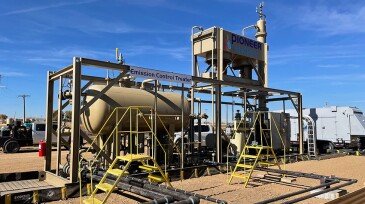
A new type of skid-mounted production facility was deployed on a pad in Weld County, Colorado, and demonstrated elimination of emissions, improved operational efficiency, and an increased crude yield of 11.3%.
-
SPE welcomes 209 members into the Legion of Honor recognizing 50 years of consecutive membership in the Society.
-
Two firms are using hydraulic fracturing to create high-pressure water reservoirs that can be turned on and off to meet electricity demand.
-
Part 4 of this series provides an overview of ongoing research and recent technology improvements within the US taking place in both academia and the service industry.
-
In this podcast episode and transcript, Terry Palisch shares his thoughts about how SPE and its members fit into the energy transition and what it means for our energy future.
-
Finding talent to advance technologies for energy transition is among the top concerns for executives in oil and gas, utilities, chemicals, mining, and agribusiness. Talent shortages, especially for technical experts, are slowing down progress.






Explore Content by Discipline
Trending Content



Get JPT articles in your LinkedIn feed and stay current with oil and gas news and technology.