

Monthly Features
-
 Drilling experts recently shared candid views on what will be required for their segment of the upstream business to move to the next stage of development.
 -
 EQT is benchmarking its way to basin-leading productivity and relying on partnerships and new technology to turn KPIs into operational reality.
 -
 This case study from Italian technology developer Sentris highlights the effectiveness of using sensors during pigging operations to optimize cleaning efficiency.
 -
 Experts and industry leaders gathered in The Woodlands, Texas, recently to sift through the challenges of carbon capture, utilization, and storage. The puzzle is coming together, but some critical pieces are still needed before the results look like the picture on the box.
 -
 Ian Phillips is the nominee for 2028 SPE President. He and six others make up the new slate of nominees recommended for positions open on the SPE International Board of Directors.
 -
 Two examples from ONGC show how supervised AI-driven automation scaled well modeling across hundreds of offshore wells, saving more than 1,000 engineering hours.
-
 Oxane Materials' advanced cerammic proppant travels farther during fracturing in larger quantities, thereby leading to smoother, higher flows of oil and gas.
 -
Members who made outstanding contributions to SPE and the petroleum industry will receive special distinction at the 2013 SPE Annual Technical Conference and Exhibition.
-
The rapid growth of progressing cavity pumps is an example of how new uses continue to emerge for older technology.
-
Drilling in extreme environments is helping drive advances in the oil and gas industry and presents analogs that can be mined for insight.
-
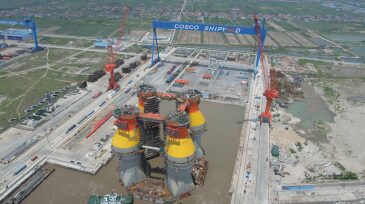
Offshore engineering companies are taking existing technologies and lessons learned from floating rigs to create a new platform design that will allow drilling in deeper waters.
-
New ventures supported by Surge Accelerator, a company that offers financial support, training, and advice from mentors, are creating software to improve oil and gas operations.
-
The discovery of additional unconventional resources, new oil recovery techniques, and more university collaborations have led to Saudi Aramco's record performance and increased technical capabilities.
-
Universities are working on some of the oil and gas industry's most challenging hurdles to develop new technologies and techniques to meet the increasing global demand for energy.
-
Measurement-while-drilling (MWD) tools were introduced to the oil and gas industry in 1978 by what was then known as Teleco Oilfield Services (bought by Baker Hughes in 1992).
-
The discrepancy between crude and natural gas prices and estimates of increasing natural gas reserves are driving companies to study small-scale gas-to-liquids plants that can tie in multiple sources or stranded gas for a greater profit.




Explore Content by Discipline
Power Up With JPT Newsletters
JPT Newsletter (Weekly).
All the top stories, trends, and tech.
JPT Unconventional Insights (Monthly).
Fresh takes on shale and tight oil.
Get JPT articles in your LinkedIn feed and stay current with oil and gas news and technology.