

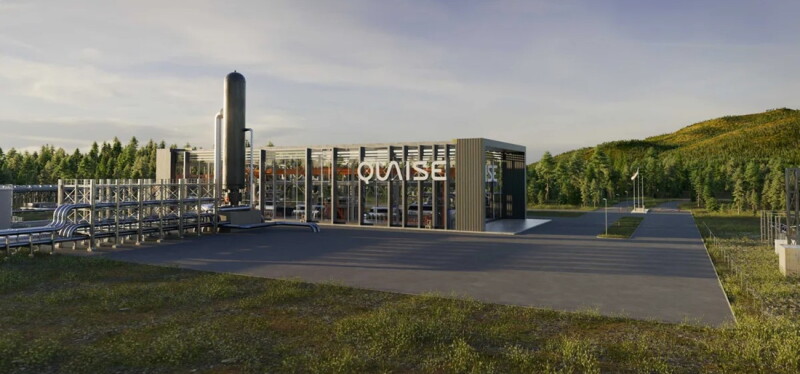
Quaise Energy, a developer of utility-scale superhot geothermal energy, announced the first close of its Series B financing round, raising $134 million with additional equity and debt capital expected to close imminently. The round was led by Prelude Ventures, with strategic investments from JERA and Idemitsu, two of Japan’s largest energy companies. Nearly all existing investors participated in the round.
“We have backed Quaise since the beginning because we believed accessing superhot rock would unlock geothermal energy at a scale the world has never seen,” said Mark Cupta, managing director at Prelude Ventures.
The proceeds from Series B are tapped to fund Project Obsidian, a commercial superhot geothermal power plant, and the continued development and commercialization of Quaise’s millimeter wave drilling system toward depths in excess of 5 km. Project-level equity and debt financing is concurrently being raised as the company advances toward first revenues secured by yet-undisclosed commercial off-take partners. The Series B round brings Quaise’s total funding raised to $230 million.
Quaise uses a millimeter wave drilling system developed at the Massachusetts Institute of Technology to ablate rock at depths and temperatures that are not economically accessible using conventional drilling. With this technology, Quaise has the potential to reach rock at temperatures of 300–500°C, enabling the construction of geothermal systems that rival fossil and nuclear energy in power density and renewables in cost.
“Our ambition is to power civilization with Earth’s most compelling energy source,” said Carlos Araque, CEO and president of Quaise Energy. “This round takes us from field-proven technology to first commercial revenues.”
Quaise has demonstrated the capability of its millimeter wave drilling system at its Central Texas site, drilling more than 100 m through granite in 2025, the first time the technology penetrated basement rock at full scale in field conditions. The company is approaching 1 km of depth at the same site, a milestone that would represent the deepest penetration achieved with millimeter wave drilling and the deepest recorded by any noncontact drilling technology. Quaise said these results validate the core technology that it plans to deploy at Project Obsidian and at other sites.
“Quaise’s millimeter wave technology has the potential to redefine what geothermal can deliver, accessing heat at depths and temperatures that were previously out of reach,” said Kei Honda, senior vice president for Idemitsu Americas Holdings.
Project Obsidian, where construction is underway, sits on federal geothermal leases in the Deschutes National Forest in Oregon, one of the most studied geothermal locations in the US. The project has gigawatt-scale potential and is expected to deliver first power to the grid by 2030. The power generated there is set to support grid stability across the Pacific Northwest at a time when the region faces rising demand and constrained transmission capacity.
The Series B round represents the initial equity component of a broader capital program. Additional components of the capital program, including project-level equity and debt financing, are expected to be announced later this year.