

carbon capture and storage
-
 This paper presents a flexible, highly cost- and energy-efficient method of gas separation and CO₂ capture from many different gas mixtures with a large range of CO₂ concentrations.
 -
This study explores the carbon-capture and mineralization potential of ultramafic rock powders when exposed to flue gases generated from combustion of crude oil and mesquite-derived charcoal.
-
This paper presents an approach for safe, efficient, and cost-effective legacy well reabandonment.
-
Plans call for the Greensand project to store 400,000 tonnes of carbon dioxide annually, with the potential to store up to 8 million tonnes annually at full capacity.
-
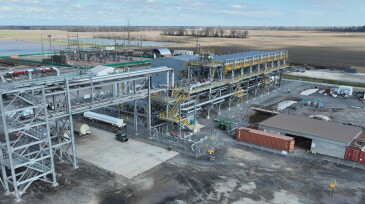
In line with its recently released Global Outlook, the major has begun storing carbon dioxide from Nucor’s iron facility in Convent, Louisiana.
-
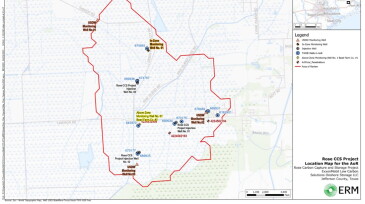
In a 2-1 vote, The Texas Railroad Commission approved the Rose carbon capture and storage project in Southeast Texas, which is planned to store up to 5 million tonnes of carbon dioxide per year.
-
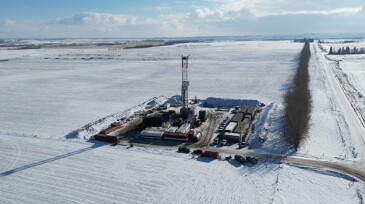
The Origins hub in Alberta, with plans to begin operations in January 2027, is expected to store up to 1.5 mtpa of carbon dioxide initially, with room to grow.
-
The latest edition of ISO 20815 extends the petroleum industry's production assurance and reliability management framework to carbon capture, hydrogen, ammonia, and wind assets.
-
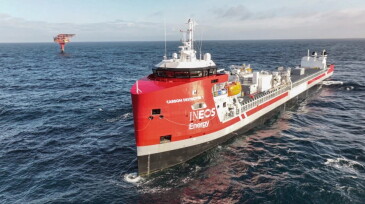
The Yara Sluiskil facility in the Netherlands expects to capture and liquefy 800,000 tons of carbon dioxide annually. The carbon dioxide is to be transported by Northern Lights vessels to Øygarden, Norway, where it will be stored.
-
This paper presents an experiment investigating dissolution of basaltic primary minerals and conditions favorable for secondary phase formation under deep subsurface storage conditions.




Page 1 of 40