CO2
-
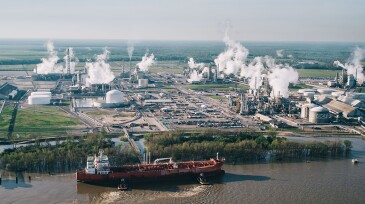
 At the center of a rush to build carbon storage is the state of Louisiana, where the number of applications to build long-term storage is equal to half the sites operating globally.
 -
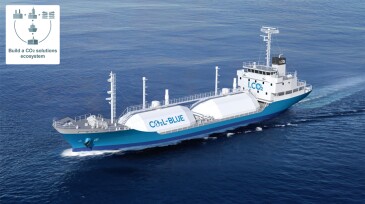
The sites with the most CO2 emissions to capture are often far from the best rock to sequester it, leading to design projects for transport ships.
-
At a time when there are many models vying to be the one used to evaluate and plan carbon storage sites, the US Department of Energy wants to test one developed by SPE members.
-
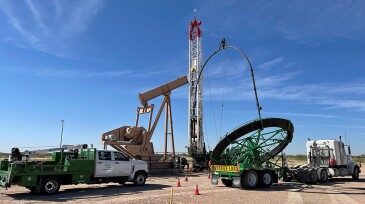
Makers of continuous sucker rods are out to convince customers that it really is possible to make a better sucker rod that could save them some money.
-
The US giant joins CF Industries and EnLink on a development that could capture and permanently store 2 million metric tons of carbon dioxide starting in 2025.
-
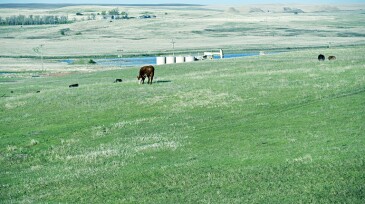
A North Dakota Supreme Court decision changed the rules for leasing pore space from landowners and their rights to compensation. This decision and the US Inflation Reduction Act, which significantly increases tax incentives for operators’ carbon capture and storage projects, is likely to spur other states to clarify their laws regulating pore space.
-
The increase in CO2 emissions has been dramatic in the last few decades. A possible solution to this difficult and intractable problem can be adopting a circular carbon economy.
-
Using CO2 as the geothermal power fluid to generate electricity from low-temperature abandoned hydrocarbon wells can help reduce well costs and optimize energy production. In this paper, a previously developed coupled well/reservoir model is extended to study the effects of fluid properties on thermal output.
-
This paper provides a comprehensive study for offshore carbon-dioxide (CO2) storage projects, identifying critical elements for estimation, injection, containment, and monitoring of CO2 plumes.
-
By turning its back on Russian oil and gas, will Europe speed up or slow down its energy transition, and what will be the impact on global climate change?