CO2
-
 The authors discuss the results of a pilot project to capture post-combustion CO2 for purposes of EOR.
 -
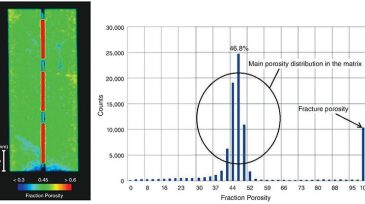
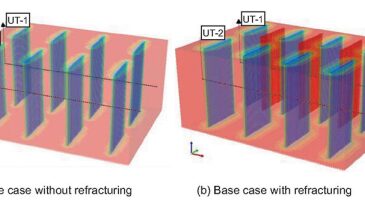
This work demonstrates that molecular diffusion may be a viable oil-recovery mechanism in fractured reservoirs during injection of carbon dioxide (CO2) for enhanced oil recovery (EOR).
-
In this paper, two different EGR methods are investigated and systematically compared in terms of efficiency.
-
In this study, the authors use measured CO2/brine relative permeability data available in the literature to study the behavior of the data obtained for various rocks.
-
This paper introduces a new carbon dioxide (CO2) -hybrid fracturing-fluid design that intends to improve production from ultratight reservoirs and reduces freshwater usage.
-
A project to predict how much carbon dioxide injected into an oil field is likely to remain there forever set off the US Department of Energy (DOE) on a search for faster data analysis methods.
-
Demand for a better way to remove carbon dioxide (CO2) from natural gas led to the creation of a new material at Rice University in Houston that does something unprecedented on the molecular scale, and might even change gas processing.
-
In this paper, a strategy for designing a novel small-molecule CO2 thickener is detailed.
-
This paper investigates the use of gelling CO2/water emulsions, stabilized by silica nanoparticles, to control the mobility of CO2.
-
This study presents experimental results on the use of carbon dioxide (CO2) as an enhanced-oil-recovery (EOR) agent in preserved, rotary sidewall reservoir core samples with negligible permeability.