HSE
-
 Consulting and engineering firm Wood is leading a joint industry partnership to create industry guidelines for carbon dioxide specifications to accelerate sustainable carbon capture, use, and storage projects.
 -
The financial losses come from reduced productivity, high employee turnover, or the loss of skilled labor as a direct result of unmanaged mental health challenges.
-
The presence of marine mammals during offshore infrastructure work is a major environmental concern. To safeguard species and their natural habitats, more and more local legislation imposes a cap on sound levels from offshore activities.
-
Radioactive elements occur naturally at low levels in oil and gas basins. As oil and gas is extracted, these elements can accumulate in infrastructure. Now, scientists in Australia are investigating the toxicity of different radiation doses to marine organisms.
-
A study out of the University of Texas at Austin highlights the importance of realistic market thresholds, targeted activism, and the potential for certified markets to drive significant environmental improvements in the industry.
-
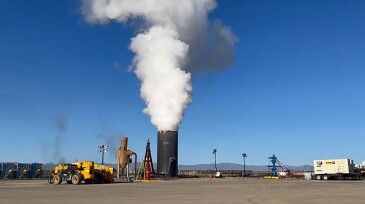
Fervo Energy proved fracturing can harvest geothermal energy and is now rapidly learning to build a utility-scale power plant.
-
Energy efficiency is crucial for the oil and gas industry, where operational costs and environmental impact are under constant scrutiny. Predicting and managing electrical consumption and peak demand accurately, especially with the variability of weather conditions, is a significant challenge. This work presents a neural network model trained on historical weather and…
-
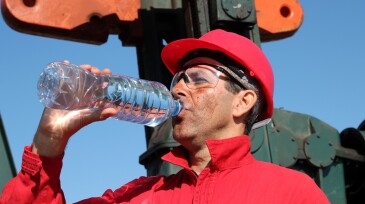
As summer temperatures rise, the threat of heat-related illness and death to oil and gas workers increases.
-
The HSE executive is urging offshore companies to take a closer look at human factors after inspectors formed the opinion that Apache failed to fully consider human factors as part of its plans to prevent a fire and explosion on one of its North Sea platforms.
-
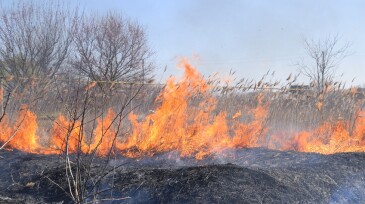
More than 100,000 oil and gas wells across the western US are in areas burned by wildfires in recent decades, a new study has found, and some 3 million people live next to wells that in the future could be in the path of fires worsened by climate change.