offshore
-
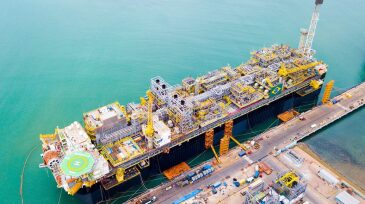
 P-68 is Petrobras’ fourth FPSO to begin operations this year following the startups of P-67 at the Lula field and P-76 and P-77 at the Buzios field.
 -
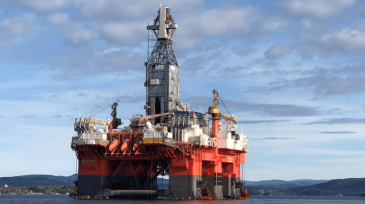
By using the four converter-battery systems, the operator estimates it will be able to reduce the runtime of the rig’s on-platform diesel engines by 42%, cutting CO2 emissions by 15% and NOx emissions by 12%.
-
Delfin Midstream announced advancements in partnership with Samsung Heavy Industries and Black & Veatch. By re-purposing existing offshore pipelines and building the FLNG vessels at Asian shipyards, the total capital costs are projected to be around $500–550/tpa.
-
Just three firms submitted bids in an auction many are deeming as a disappointment for Brazil.
-
The US major has had a stake in the field since it started production in 1997. It produced 584,000 B/D of oil last year.
-
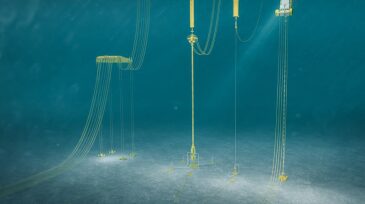
Nonmetallic, thermoplastic composite pipe (TCP) technology can now be found in every oil and gas region globally and can operate at pressures of up to 12,500 psi, and in water depths as low as 3000 m. The focus is now on developing and deploying TCP risers for extreme environments.
-
GAO believes BOEM often undervalues its tracts offered to operators in offshore lease sales.
-
The Esox-1 well encountered 58 m of high-quality oil-bearing Miocene reservoirs and will be tied back to Tubular Bells production facilities.
-
Offshore facilities are typically powered from onsite gas turbines but efforts to become “carbon efficient” are pushing oil and gas companies toward an onshore alternative.
-
The Orca-1 and Marsouin-1 wells have derisked up to 50 Tcf of gas initially in place from the Cenomanian and Albian plays in the BirAllah area, more than sufficient to support a world-scale LNG project, partner Kosmos Energy said.