Acidizing/stimulation

This paper reviews fracturing-program design, completion technology, real-time data collection, data integration, and lessons learned for the Pikka development on the North Slope of Alaska.

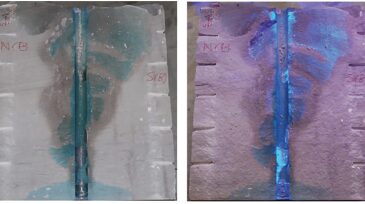
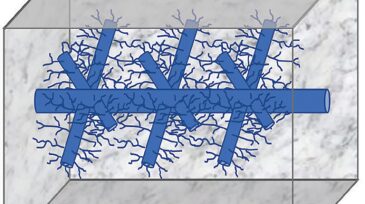
This paper presents a case study of a tool-free fishbone fracture stimulation technology using sand jetting and acidizing in openhole wells, providing a technical solution for low-permeability and complex-lithology carbonate reservoirs in the Middle East.

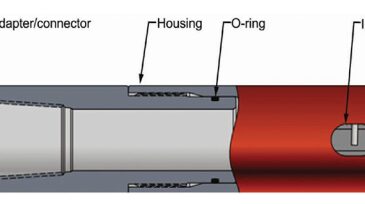
This paper presents a case study of oriented tubing-conveyed perforation followed by an acidizing operation to overcome technical challenges posed by a depleted reservoir targeted for a carbon capture, utilization, and storage project.
-
 This paper contains a detailed discussion of methods and a software tool that has been developed to generate information that predicts formation-face pressures in real time with the help of live bottomhole-pressure data.
 -
The fourth industrial revolution is taking the oil and gas business by storm. Many companies have increased resources for big-data analytics and machine learning. Though no one sees physical oilfield services as in decline, development in these areas may take a back seat to artificial intelligence.
-
This paper covers the staged field-development methodology, including analysis and evaluation of various development concepts, that enabled the company to optimize both completion design and artificial-lift selection, reducing downtime and lowering operating costs by nearly 50%.
-
Completion engineers feel pressure to maximize production per acre and minimize the downsides of fracturing in tight spaces. Terry Palisch, talks about promoting knowledge sharing as part of JPT’s tech director report.
-
Seismic stimulation, achievable with the implementation of a single tool, requires significantly lower investments than gas, thermal, and chemical injection methods, with minimal environmental impact.
-
This paper describes an experimental study with a new propellant and aims to understand the pattern of fracture creation with these propellants.
-
The evolution of horizontal drilling and multistage completions has changed matrix stimulation from the “more acid, better result” belief to effective lateral distribution and deeper penetration with less acid.
-
Fluids introduced into a reservoir for stimulation typically take the path of least resistance and, therefore, frequently go into areas with open flow paths. In many cases, those areas are not the targets of stimulation.
-
This paper presents the planning and execution of a matrix-stimulation pilot project in the heavy-oil Chichimene Field in Colombia.