AI/machine learning

As digital technologies become commonplace, industry leaders say core engineering knowledge remains essential for making informed decisions and avoiding costly mistakes.

The deals, with a potential value exceeding $3.7 billion, are aimed at strengthening Saudi Aramco’s supply chains and expanding its use of industrial artificial intelligence.

This work applies fuzzy logic, a well-established artificial-intelligence technique, to quantitatively assess connectivity between injectors and producers in a giant presalt field in the Santos Basin of Brazil.
-
 The companies said they plan to start deploying digital twin technologies in Oman this year.
 -
Oil and gas experts encourage human/AI partnerships that can “supercharge” capabilities to create competitive advantages.
-
This paper reviews the motivation and development of response-based forecasting from the perspective of the authors, reviewing examples and processes that have served as validation and led to modeling refinement.
-
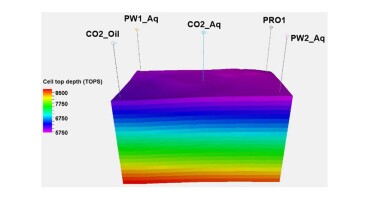
This paper presents a novel workflow with multiobjective optimization techniques to assess the integration of pressure-management methodologies for permanent geological carbon dioxide storage in saline aquifers.
-
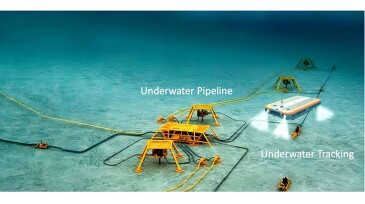
This paper introduces a technology for offshore pipeline inspection centered on an autonomous robotic system equipped with underwater computer vision and edge-computing capabilities.
-
Deploying artificial intelligence across an enterprise requires thinking beyond the pilot.
-
The fifth edition of the SPE Europe Energy GeoHackathon, beginning on 1 October, focuses on how data science can advance geothermal energy and drive the energy transition.
-
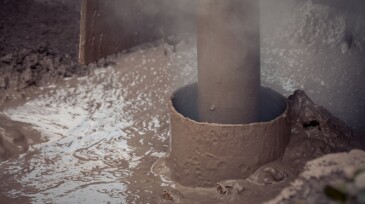
This paper presents the development of a robust, physics-based, and data-driven workflow for modeling mud loss in fractured formations and predicting terminal mud loss volume and time, as well as equivalent hydraulic fracture aperture.
-
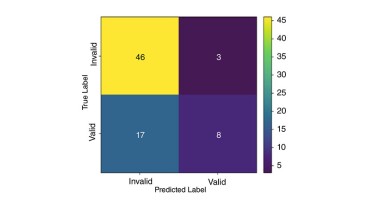
This paper introduces a machine-learning approach that integrates well-logging data to enhance depth selection, thereby increasing the likelihood of obtaining accurate and valuable formation-pressure results.
-
This study aims to use machine-learning techniques to predict well logs by analyzing mud-log and logging-while-drilling data.