AI/machine learning

This research focuses on combining physics-based expert rules with machine learning to improve the detection of failure-related events in electrical submersible pumps.

A combination of physics principles and machine-learning techniques is used in this work to develop a virtual flowmeter for oil-production optimization in electrical-submersible-pump-lifted oil wells, resulting in reliable generalization.

This paper presents the deployment of an artificial intelligence-enabled autonomous gas lift optimization system, integrating real-time centralized advanced process control with cloud-based analytics to enhance artificial gas lift performance in producer wells.
-
 In this third work in a series, the authors conduct transfer-learning validation with a robust real-field data set for hydraulic fracturing design.
 -
This research aims to develop a fluid-advisory system that provides recommendations for optimal amounts of chemical additives needed to maintain desired fluid properties in various drilling-fluid systems.
-
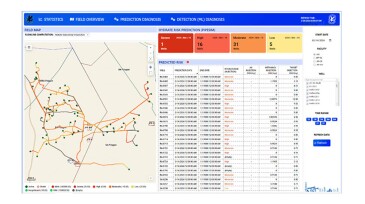
This paper discusses a comprehensive hybrid approach that combines machine learning with a physics-based risk-prediction model to detect and prevent the formation of hydrates in flowlines and separators.
-
This paper explains that the discovery of specific pressure trends, combined with an unconventional approach for analyzing gas compositional data, enables the detection and prediction of paraffin deposition at pad level and in the gathering system.
-
Adaptability, collaboration, and digital technologies are all pages in Aramco’s oilfield R&D playbook.
-
Industry experts dissected the challenges in deploying artificial intelligence across the energy sector during a special session at SPE’s Annual Technical Conference and Exhibition.
-
AI is transforming the field of cybersecurity, offering new possibilities and challenges for both defenders and attackers, but AI also can introduce new vulnerabilities and risks and raise new ethical, legal, and social issues for cybersecurity.
-
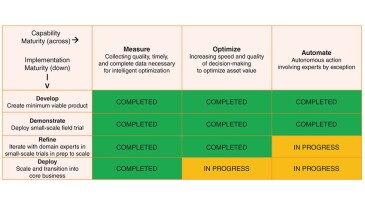
This paper presents a case study highlighting the demonstration, refinement, and implementation of a machine-learning algorithm to optimize multiple electrical-submersible-pump wells in the Permian Basin.
-
This paper presents a closed-loop iterative well-by-well gas lift optimization workflow deployed to more than 1,300 operator wells in the Permian Basin.
-
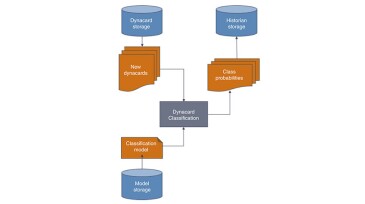
This paper explores the use of machine learning in predicting pump statuses, offering probabilistic assessments for each dynacard, automating real-time analysis, and facilitating early detection of pump damage.