AI/machine learning

As digital technologies become commonplace, industry leaders say core engineering knowledge remains essential for making informed decisions and avoiding costly mistakes.

The deals, with a potential value exceeding $3.7 billion, are aimed at strengthening Saudi Aramco’s supply chains and expanding its use of industrial artificial intelligence.

This work applies fuzzy logic, a well-established artificial-intelligence technique, to quantitatively assess connectivity between injectors and producers in a giant presalt field in the Santos Basin of Brazil.
-
 The new burner, created with the help of machine learning and additive manufacturing, promises high methane destruction efficiency and combustion stability even in windy conditions.
 -
Transitioning to a low-carbon economy demands large-scale CO2, natural gas, and hydrogen storage. In this context, the application of AI/ML technology to uncover geochemical, microbial, geomechanical, and hydraulic mechanisms related to storage and solve complicated history-matching and optimization problems, thereby enhancing storage efficiency, has been prominently …
-
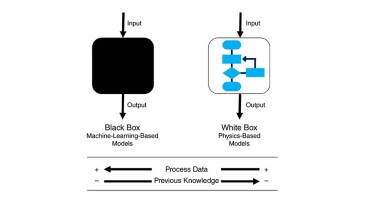
The authors propose a hybrid virtual flow and pressure metering algorithm that merges physics-based and machine-learning models for enhanced data collection.
-
The service giant shares new details about its automated fracturing spreads that slash human operator workload by 88%.
-
The trial phase of the agentic program used AI agents and combined large-language-model technology with data collected from more than 15% of ADNOC’s onshore and offshore wells.
-
SLB said it plans to integrate INT’s technology into its digital data and artificial intelligence platforms.
-
Chevron’s announcement comes on the heels of ExxonMobil’s announcement in December of a similar project to deliver natural gas-fueled electricity to US data centers.
-
These papers provided insights and advances into field-operations automation, machine-learning-assisted petrophysical characterization, and fluid-distribution analysis in unconventional assets.
-
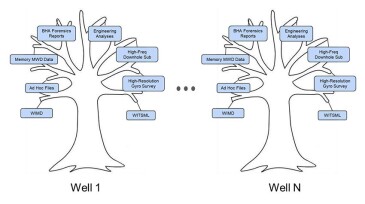
The authors make the case that data science captures value in well construction when data-analysis methods, such as machine learning, are underpinned by first principles derived from physics and engineering and supported by deep domain expertise.
-
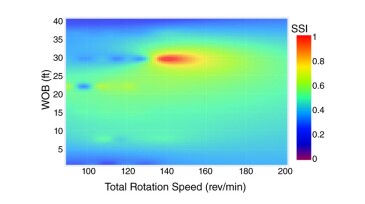
In this paper, the authors propose a regression machine-learning model to predict stick/slip severity index using sequences of surface measurements.