AI/machine learning

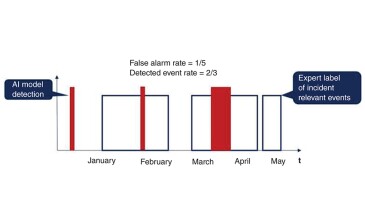
This research focuses on combining physics-based expert rules with machine learning to improve the detection of failure-related events in electrical submersible pumps.

A combination of physics principles and machine-learning techniques is used in this work to develop a virtual flowmeter for oil-production optimization in electrical-submersible-pump-lifted oil wells, resulting in reliable generalization.

This paper presents the deployment of an artificial intelligence-enabled autonomous gas lift optimization system, integrating real-time centralized advanced process control with cloud-based analytics to enhance artificial gas lift performance in producer wells.
-
 By incorporating AI-powered solutions, companies can tailor wellness plans to cater to the diverse needs of their workforce, fostering a more inclusive and supportive environment.
 -
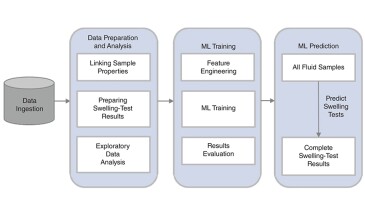
The authors of this paper present a machine-learning-based solution that predicts pertinent gas-injection studies from known fluid properties such as fluid composition and black-oil properties.
-
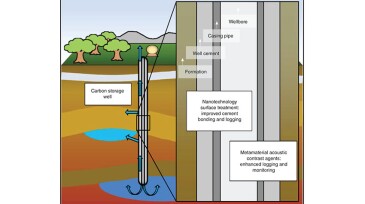
The authors of this paper describe a suite of technologies that enables enhanced well robustness and performance modeling and monitoring of carbon storage facilities.
-
This paper presents the proof of concept of artificial-intelligence-based well-integrity monitoring for gas lift, natural flow, and water-injector wells.
-
The authors of this paper describe a project aimed at automating the task of cuttings descriptions with machine-learning and artificial-intelligence techniques, in terms of both lithology identification and quantitative estimation of lithology abundances.
-
Finding and producing crude and natural gas is far, far removed from the days of acting on a geologist’s hunch or a wildcatter’s gut feeling.
-
It is imperative for energy companies to assess potential legal ramifications of integrating artificial intelligence into their operations.
-
Few oil and gas companies give data science projects the better part of a decade to prove out, but that’s just what this one did.
-
The company has announced that it will be expanding the use of generative AI to assist its employees.
-
The oil and gas industry is embracing digital technology not just as a differentiator but as an enabler of innovation. The simple reality is that, if one doesn’t, they risk being out of the game.