AI/machine learning

The deals, with a potential value exceeding $3.7 billion, are aimed at strengthening Saudi Aramco’s supply chains and expanding its use of industrial artificial intelligence.

This work applies fuzzy logic, a well-established artificial-intelligence technique, to quantitatively assess connectivity between injectors and producers in a giant presalt field in the Santos Basin of Brazil.

The DOE-backed EGS-Twin project aims to simulate geothermal production systems, helping operators better predict performance and maximize output.
-
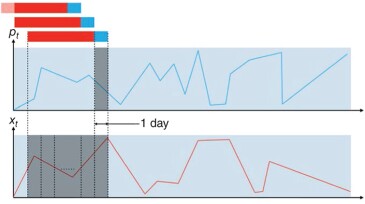
 The authors of this paper propose a novel approach to data-driven modeling for transient production of oil wells.
 -
Peter Bernard, CEO of Datagration, discusses how oil and gas industry predictive maintenance doesn’t just provide an economic value, it also boosts safety by anticipating unpredicted failures among aging infrastructure.
-
Geolog and Petro.ai announced a strategic partnership to deliver data science products and services to the global energy industry.
-
With so much volatility in the sector, acutely felt by many western consumers, how are intelligent work flows enabling the shift toward alternatives?
-
Incorporating domain knowledge into your architecture and your model can make it a lot easier to explain the results, both to yourself and to an outside viewer. Every bit of domain knowledge can serve as a stepping stone through the black box of a machine learning model.
-
In this work, novel physics-based models and machine-learning models are presented and compared for estimating permanent-downhole-gauge measurements.
-
The AIoT has the potential to transform industries and society, and it is already starting to have an impact. This article will explore the principles of AIoT, its benefits, and its current use.
-
Supervised learning has many commercial applications; however, such learning lacks the capability to generate new insights and knowledge. In contrast, unsupervised learning discovers the inherent structures in unlabeled data, thereby helping generate new insights and actionable knowledge from large volumes of data.
-
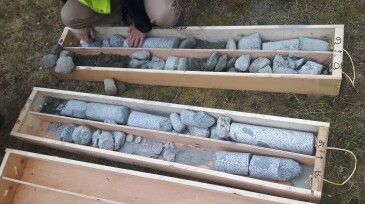
Researchers from Skoltech have trained a neural network to recognize rock samples in core box images efficiently. The process has sped up analysis by up to 20 times and made it possible to automate the description of rock samples.
-
Chief digital and information officer Sandeep Gupta's innovative use of technology has enabled the company to cut costs, reduce time to first oil, and manage decline in production.