AI/machine learning

Case studies from Devon Energy, ConocoPhillips, and others show how clever engineering and technology are being used to improve recovery and asset value.

This case study from Tomax outlines the use of artificial intelligence to analyze high-fidelity data of the full drilling process.

This study demonstrates the transformative potential of physics-informed neural networks as a hybrid framework for multiphase flow measurement.
-
 Phase 1 covers the modeling and monitoring of assets for six ADNOC Group companies. The four phases of the project are expected to be completed by 2022.
-
SponsoredWith an intense focus on improving returns and cash flow, oil and gas producers need step-change improvement in managing production versus plan. Embracing AI is critical to overcoming today's tools that largely fall short of achieving that ultimate goal.
-
The agreement signed by Schlumberger, AIQ, and Group 42 is designed to develop and commercialize artificial intelligence for global exploration and production.
-
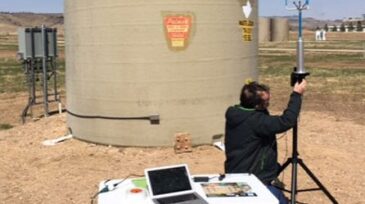
A new study confirms the success of a natural-gas leak-detection tool pioneered by Los Alamos National Laboratory scientists that uses sensors and machine learning to locate leak points at oil and gas fields, promising new automatic, affordable sampling across a vast natural gas infrastructure.
-
The oil and gas industry has picked up on the benefits of digitization and artificial intelligence in its day-to-day activities, and the health, safety, and environment sector is no exception. While AI brings clear benefits, the risks that come with those benefits remain unclear.
-
The coronavirus crisis had a devastating effect on oil-company revenues, but it has posed a tough human-resources problem too: how to keep workers safe on cramped rigs at sea where social-distancing is impossible. Many operators have found an answer in technology—specifically, digital twins.
-
Incorporating imagination into AI agents has long been an elusive goal of researchers in the space. Imagine AI programs that are able not only to learn new tasks but also to plan and reason about the future.
-
The complete paper provides an approach using machine-learning and sequence-mining algorithms for predicting and classifying the next operation based on textual descriptions.
-
In addition to the well-recognized elements of digital transformation such as real-time monitoring, remote intelligence, and extraction of insights from data, there is a need to evolve the industry hardware through application of enhanced edge computing.
-
The complete paper describes an automated machine-learning approach to determine the spatial variation in decline type curves for shale gas production, based on existing data of production, completion, and geological parameters.