AI/machine learning

Sustainability in reservoir management emerges not from standalone initiatives but from integrated, data-driven workflows—where shared models, closed-loop processes, and AI-enabled insights reduce fragmentation and make sustainable performance a natural outcome.

Sponsored
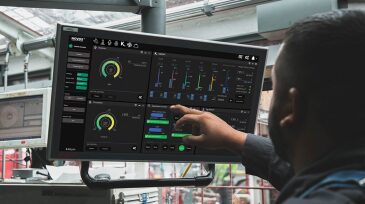
In oil and gas operations, every decision counts. For more than 2 decades, SiteCom has been the trusted digital backbone for well operations worldwide, driving insight, collaboration, and efficiency.

This study presents a novel hybrid approach to enhance fraud detection in scanned financial documents.
-
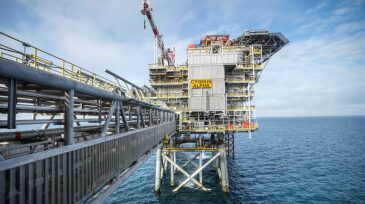
 Using 3D and artificial intelligence technologies, a digital map of all three bridge-linked jackets was captured, enabling Neptune to detect asset-integrity issues early and plan fabric maintenance work on Cygnus.
 -
This story reviews well-adopted ideas that have stood the test of time, presenting a small set of techniques that covers a lot of basic knowledge necessary to understand modern deep learning research.
-
In industries where data is key to gaining competitive advantage, artificial intelligence and machine learning have become necessities. Tim Custer, senior vice president with Apache, shares how artificial intelligence is affecting the way the energy business operates.
-
Recent advances in data technology and machine learning have disrupted many businesses and processes and can lead to a new paradigm in workplace safety as well. This case study demonstrates the application of data science and predictive analytics to aid the health, safety, and environment function.
-
An intelligent drilling optimization application performs as an adaptive autodriller. In the Marcellus Shale, ROP improved 61% and 39% and drilling performance, measured as hours on bottom, improved 25%.
-
The 5-year effort will take advantage of Microsoft technologies in machine learning, augmented reality, user interactions, and the industrial Internet of things to deliver integrated solutions to the upstream industry.
-
This policy brief explores the key issues in attempting to improve cybersecurity and safety for artificial intelligence as well as roles for policymakers in helping address these challenges.
-
Research shows how to understand the role of individual neurons in a neural network.
-
Like biological brains, artificial neural networks may depend on slow-wave sleep for learning.
-
With their gee-whiz—albeit artificial—intelligence, robots may be the industry’s answer to jobs deemed dangerous, dirty, distant, or dull.