AI/machine learning

As digital technologies become commonplace, industry leaders say core engineering knowledge remains essential for making informed decisions and avoiding costly mistakes.

The deals, with a potential value exceeding $3.7 billion, are aimed at strengthening Saudi Aramco’s supply chains and expanding its use of industrial artificial intelligence.

This work applies fuzzy logic, a well-established artificial-intelligence technique, to quantitatively assess connectivity between injectors and producers in a giant presalt field in the Santos Basin of Brazil.
-
 Researchers with the Energy & Environmental Research Center highlight the key use cases ChatGPT holds today for petrotechnicals.
 -
ChatGPT and its derivative artificial intelligence chatbots are fulfilling the needs and satisfying the curiosity of novices and more experienced AI users. Have you gotten your feet wet or dove right in?
-
For organizations that do it well, data management provides a competitive edge in an increasingly digital oil field. But teams all too often are so busy managing all the moving parts of data management that they take their eye off of “the prize”—the payoff after you have put everything into place to sustain successful data management.
-
This paper details experiences gained while developing a novel technology-driven approach to risk assessment methodologies such as process hazard analysis, hazard identification, and hazard operability in oil and gas.
-
SPE Data Science and Engineering Analytics Technical Director Silviu Livescu and SPE Reservoir Technical Director Rodolfo Camacho address some of the challenges in the application of data analytics, artificial intelligence, and machine learning to several reservoir engineering problems.
-
The use of artificial intelligence in the clean energy sector increases the availability and accessibility of clean energy, making it a more viable and cost-effective alternative to traditional energy sources.
-
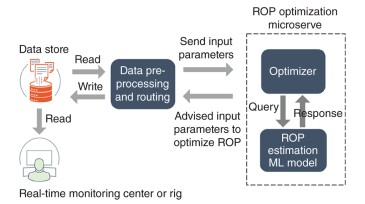
The authors of this paper discuss a global rate-of-penetration machine-learning model with the potential to eliminate learning curves and reduce time and costs associated with developing a new model for every field.
-
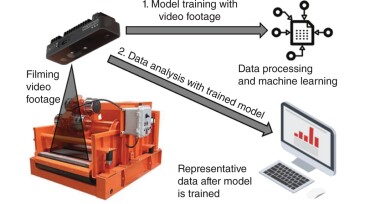
The authors of this paper describe a project that demonstrated the feasibility of using deep-learning and machine-learning approaches to introduce camera-based solids monitoring to the drilling industry.
-
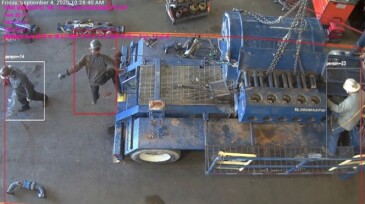
Vision analytics is being used to extract insight information from video, with data inferred from existing cameras used to create a monitoring dashboard where supervisors can receive alerts at the worksite level or drill down to specific events.
-
GlobalData’s report "Robotics in Oil and Gas" notes that, while robotics has been a part of the oil and gas industry for several decades, growing digitalization and integration with artificial intelligence, cloud computing, and the Internet of Things have helped diversify robot use cases within the industry.