AI/machine learning

Speakers at ATCE said innovative technologies will play a critical role in balancing energy security, affordability, and sustainability in the years ahead.

Known as Arena, the collaboration aims to improve decision-making across increasingly complex reservoirs and growing volumes of subsurface data.

Robotic and autonomous systems are transforming energy operations, but their full value emerges only when paired with data science, engineering analytics, and AI/ML to turn data into decisions. The transition of the SPE Robotic & Autonomous Systems Technical Section into the SPE Data Science & Engineering Analytics Technical Section helps bridge this critical technolo…
-
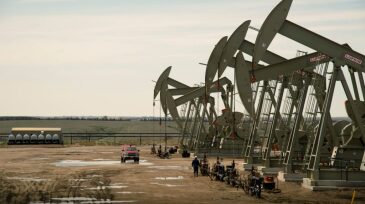
 Hundreds of rod-lift wells in North Dakota are about to get a big upgrade.
-
A recent research effort has shown that the digital journey is full of stumbling blocks. Just like humans, advanced computing technology will get some things right and some things wrong.
-
The company behind the world’s most popular search engine is trying to click with the upstream business at the most distinguished technical event of the year.
-
The perceived change stemming from the spread of machine learning and artificial intelligence can feed alarming predictions about massive job losses, but replacement of humans is a low priority among organizations implementing these technologies.
-
Total is expanding its development and use of artificial intelligence to bolster its exploration work, collaborating with Google Cloud—which is stepping up its presence in the oil and gas industry.
-
The goal of cognitive computing is not to eliminate humans but allow highly skilled professionals to spend time doing what’s most valuable for the company.
-
A look at how policy, future workforce perception, and industry standards will shape energy companies in the near and distant future.
-
How can AI systems incorporate processes mimicking the slower logic- and causality-based reasoning patterns of the left brain?
-
Tiny soil samples may contain as many as 300,000 species of microbial life, but a Netherlands-based startup has figured out that between 50 and 200 of them can tell an operator if a drilling location will hold oil and gas reserves.