AI/machine learning

Known as Arena, the collaboration aims to improve decision-making across increasingly complex reservoirs and growing volumes of subsurface data.

Robotic and autonomous systems are transforming energy operations, but their full value emerges only when paired with data science, engineering analytics, and AI/ML to turn data into decisions. The transition of the SPE Robotic & Autonomous Systems Technical Section into the SPE Data Science & Engineering Analytics Technical Section helps bridge this critical technolo…
A credible custody-transfer record depends on far more than the accuracy of a single meter. It is the product of an integrated measurement chain. While meter performance supports measurement-system integrity, commercial confidence also depends on traceability, governance, and authorization.
-
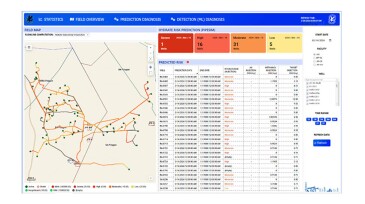
 This paper describes a machine-learning approach to accurately flag abnormal pressure losses and identify their root causes.
 -
Even as industry faces policy and tariff uncertainty, companies view spending on digital transformation as a driver of efficiency.
-
The Tela artificial intelligence assistant is designed to analyze data and adapt upstream workflows in real time.
-
In this third work in a series, the authors conduct transfer-learning validation with a robust real-field data set for hydraulic fracturing design.
-
This research aims to develop a fluid-advisory system that provides recommendations for optimal amounts of chemical additives needed to maintain desired fluid properties in various drilling-fluid systems.
-
This paper explains that the discovery of specific pressure trends, combined with an unconventional approach for analyzing gas compositional data, enables the detection and prediction of paraffin deposition at pad level and in the gathering system.
-
This paper discusses a comprehensive hybrid approach that combines machine learning with a physics-based risk-prediction model to detect and prevent the formation of hydrates in flowlines and separators.
-
Adaptability, collaboration, and digital technologies are all pages in Aramco’s oilfield R&D playbook.
-
Industry experts dissected the challenges in deploying artificial intelligence across the energy sector during a special session at SPE’s Annual Technical Conference and Exhibition.
-
AI is transforming the field of cybersecurity, offering new possibilities and challenges for both defenders and attackers, but AI also can introduce new vulnerabilities and risks and raise new ethical, legal, and social issues for cybersecurity.