Artificial lift

Unlike traditional AI approaches that rely primarily on historical data, physics-based AI integrates physical laws, engineering expertise, and operational constraints directly into the learning process. Three recent SPE papers illustrate how this paradigm is transforming the industry through intelligent condition monitoring, virtual sensing, and autonomous production …

This research focuses on combining physics-based expert rules with machine learning to improve the detection of failure-related events in electrical submersible pumps.

A combination of physics principles and machine-learning techniques is used in this work to develop a virtual flowmeter for oil-production optimization in electrical-submersible-pump-lifted oil wells, resulting in reliable generalization.
-
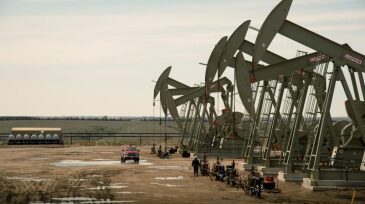
 Hundreds of rod-lift wells in North Dakota are about to get a big upgrade.
 -
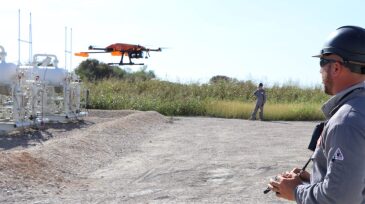
Venture groups spend their time evaluating hundreds of companies each year to only make a handful of investments. These two cover interesting ends of the upstream spectrum: aerial drones and downhole artificial lift.
-
This paper presents how a US onshore operator took a three-step approach to optimize more than 100 rod-pump wells. The approach involved data consolidation, automated work flows, and interactive data visualization.
-
This paper presents a comparison of conventional ESP methods and artificial-sump systems for which free gas and gas slugs are a challenge.
-
This paper describes the consequences of using an assumed R ratio in a gas-lift design that is not the same as the actual R ratio of the valve.
-
One of the more exciting aspects of artificial lift is the constant influx of new technologies and new ideas that the discipline invites. Inventors appear to be regularly developing “the next new thing” in artificial lift.
-
Subsea pumps are used for gas/liquid separation, subsea compression, and subsea boosting. Solutions aiming at cost reductions are crucial to make subsea processing projects feasible. A cost- and complexity-reduction solution for the subsea electrical power supply is a critical consideration.
-
Extensive analysis has led to the conclusion that downhole gas compression provides a greater increase in gas production than wellhead gas compression because of the additional drawdown created.
-
Rockwell Automation’s Luis Gamboa explains his company’s new solution designed to allow operators to collect, sort, and reconcile the quality and quantity of data from multiple sources to optimize field data.
-
This paper focuses on a fit-for-purpose methodology to evaluate well-production performance for a wide range of artificial-lift techniques.