Carbon capture and storage

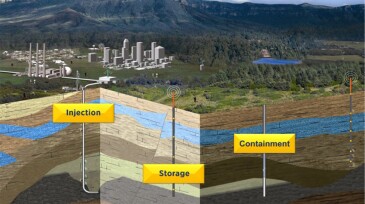
This paper presents an experiment investigating dissolution of basaltic primary minerals and conditions favorable for secondary phase formation under deep subsurface storage conditions.

This study aims to investigate the efficacy of chemical additives strontium chloride and barium hydroxide in accelerating CO₂ trapping mechanisms, their effect on dissolution of carbonate-bearing minerals, and resulting poroelastic changes in the host rock.

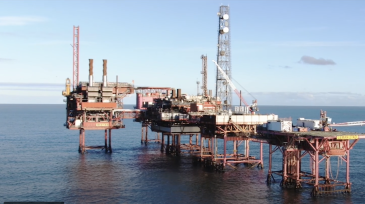
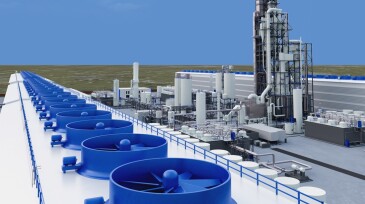
This paper describes the potential of combined-cycle technology (use of a gas turbine and a steam turbine together to turn fuel into electricity) in offshore carbon-capture applications.
-
 The agreement calls for approximately 2.3 million metric tons of carbon dioxide to be securely stored per year at 1PointFive’s Pelican Sequestration Hub in Louisiana.
 -
The 2025 update to SPE’s CO₂ Storage Resources Management System (SRMS) is now available. Following a 2-year review, the updated framework—endorsed by six professional societies—builds on the original 2017 system to support consistent classification, evaluation, and reporting of CO₂ storage resources. A key change in the 2025 SRMS Update is the inclusion of CO₂ EOR as…
-
The UK North Sea Transition Authority has awarded the required permits for the East Irish Sea project, and the project has reached financial close. The carbon capture and storage project is expected to receive its first carbon dioxide in 2028.
-
The full potential of data can only be realized when it is viewed not in isolation but as part of the dynamic triad of hydrocarbons, the data, and the people who interpret it and act on it.
-
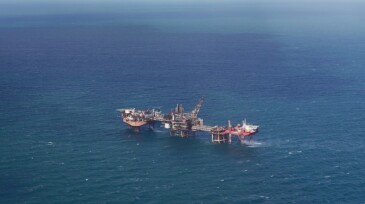
The test marks a milestone in the Poseidon CCS project, which aims to store carbon dioxide in the depleted gas reservoir below the Leman development in the southern North Sea.
-
The storage permits, the first of their kind, allow the Stratos facility to move forward with plans to capture and store up to 500,000 tonnes of carbon dioxide per year.
-
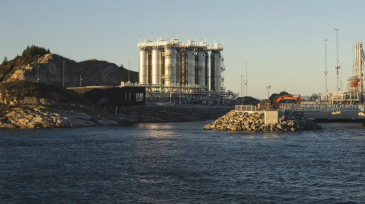
The first phase of the Norwegian project is expected to receive its first carbon dioxide this year, with the second phase slated to start operations in late 2028.
-
This paper introduces a novel optimization framework to address CO2 injection strategies under geomechanical risks using a Fourier neural operator-based deep-learning model.
-
Industry leaders say they believe oil and gas will continue to play a pivotal role in the energy mix in the lengthening energy transition timeline.
-
Transitioning to a low-carbon economy demands large-scale CO2, natural gas, and hydrogen storage. In this context, the application of AI/ML technology to uncover geochemical, microbial, geomechanical, and hydraulic mechanisms related to storage and solve complicated history-matching and optimization problems, thereby enhancing storage efficiency, has been prominently …