Carbon capture and storage

This paper presents an approach for safe, efficient, and cost-effective legacy well reabandonment.

This paper presents a flexible, highly cost- and energy-efficient method of gas separation and CO₂ capture from many different gas mixtures with a large range of CO₂ concentrations.

This study explores the carbon-capture and mineralization potential of ultramafic rock powders when exposed to flue gases generated from combustion of crude oil and mesquite-derived charcoal.
-
 Tokyo is seeking partnerships in the UAE to leverage its technologies to produce clean energy for export back to Japan.
 -
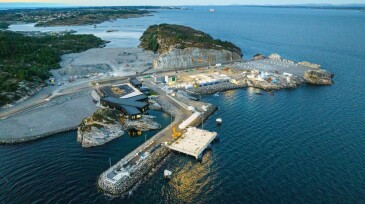
The region stands to benefit from TotalEnergies’ experience as a partner in Norway’s Northern Lights CCS development to decarbonize industrial operations in northern Europe. The first injection of carbon dioxide at Northern Lights is expected in 2024.
-
Because the basics of CCS and CCUS are mostly familiar to a large part of the readership, I am choosing to bring to your attention the summary of those articles that are devoted to approaches other than or beyond CCS, even if they have to climb further on the development ladder. These include bio-based approaches, geothermal, and use of hydrogen as a substitute fuel.
-
A decade ago, SPE defined key R&D and technology challenges for the industry. To address the more uncertain environment of the 2020s and beyond, we have updated the grand challenges via a January 2023 SPE workshop.
-
Under the new agreement, ExxonMobil will capture, transport, and store carbon from Nucor’s direct reduced iron plant in Louisiana.
-
The innovations in the carbon removal space are gaining attention for their potential to curb global climate change, but they each face particular challenges in implementation.
-
Companies licensed to drill in the North Sea will report their findings to regulators under new powers brought forward in an Energy Bill amendment.
-
SPE Journal has issued a call for papers for the 11th Comparative Solution Project (CSP) Special Issue. Organized by guest editors Anthony Kovscek (Stanford University) and Knut-Andreas Lie (SINTEF), submissions that are both directly and indirectly related to the 11th CSP will be accepted.
-
Also: A report says Bitcoin mining could ease emissions. Haliburton is accelerating its clean-energy efforts, while insurer Chubb cracks down on methane. ExxonMobil and Linde team up in Texas. Shell plans to limit CO2 emissions in Dutch plants, and Drax presses pause on bioenergy in the UK.
-
Deployment of Mosaic DAC pilot units are envisaged for a pair of HIF eFuel facilities.