Carbon capture and storage

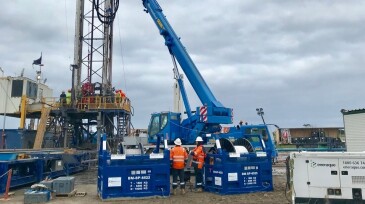
This paper presents an approach for safe, efficient, and cost-effective legacy well reabandonment.

This paper presents a flexible, highly cost- and energy-efficient method of gas separation and CO₂ capture from many different gas mixtures with a large range of CO₂ concentrations.

This study explores the carbon-capture and mineralization potential of ultramafic rock powders when exposed to flue gases generated from combustion of crude oil and mesquite-derived charcoal.
-
 A critical challenge for those designing carbon dioxide storage sites is predicting where the injected gas will go. One of the only sure bets is to assume that any model of a gas plume that looks symmetrical is likely wrong.
 -
ADNOC lays out a $15-billion installment in its long-term plan to reduce its carbon footprint.
-
Denbury acquires carbon-storage land in the South, Baker Hughes forms a new wells consortium, and Chevron and BP expand their investments. Hydrogen takes center stage across the globe, while the international energy transition makes strides toward its goals.
-
A consortium of 20 organizations, REX-CO2, including research institutions, operators, and regulatory authorities, studied mature wells in two areas of the UK Continental Shelf. Subsurface data were evaluated and verified the wells’ potential suitability for both reuse and CO2 injection and storage.
-
The CO2 capture capacity of all CCS facilities under development increased 44% over the past 12 months, bringing the total capacity of those projects to 244 mtpa of CO2.
-
The US giant joins CF Industries and EnLink on a development that could capture and permanently store 2 million metric tons of carbon dioxide starting in 2025.
-
Occidental Petroleum is considered one of the upstream industry’s most dynamic companies after making major investments to boost oil and gas production while also scaling up low-carbon technologies.
-
Texas and Louisiana are stepping up efforts to assume regulatory authority for an emerging wave of carbon capture and storage projects.
-
The CStore1 project aims to prove that floating storage and injection facilities are competitive with pipelines and fixed offshore infrastructure.
-
Glynn Williams, CEO of Silixa, offers his take on the role fiber-optic technology will play in the rise of CO2 storage and on the firm’s progress in the tight-rock sector.