Carbon capture and storage

This paper presents an approach for safe, efficient, and cost-effective legacy well reabandonment.

This paper presents a flexible, highly cost- and energy-efficient method of gas separation and CO₂ capture from many different gas mixtures with a large range of CO₂ concentrations.

This study explores the carbon-capture and mineralization potential of ultramafic rock powders when exposed to flue gases generated from combustion of crude oil and mesquite-derived charcoal.
-
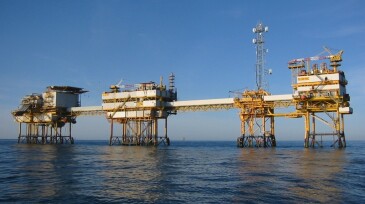
 The project aims to store 5 million tons of CO₂ annually, equivalent to a third of the total CO2 emissions from Dutch domestic vehicles in 1 year.
 -
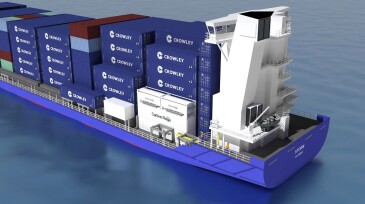
A pilot project will explore onboard carbon capture for container ships, and two heavy-hitters are teaming up to find decarbonization paths in the Asia Pacific region. Elsewhere, wind and solar are on track to pass coal in the race to generate electricity.
-
The memorandum of understanding aims to improve digital work flows in the emerging carbon capture and storage industry.
-
A surge in permit applications for long-term carbon storage sites reflects where industrially produced carbon dioxide can be harvested, and where the necessary pipelines are.
-
The captured carbon dioxide will be permanently sequestered in the Cameron Parish CO2 Hub to be located offshore Louisiana.
-
Several projects have been scrapped across the US as inflation causes project costs to soar, while projects in Costa Rica and Rotterdam move forward.
-
New York-based BlackRock will put more than half a billion dollars into Occidental's first direct air capture project, which is now 30% completed.
-
In the US, localized opposition and regulatory uncertainty are threatening to kill or severely limit the use of carbon capture, use, and storage (CCUS) in the fight against climate change.
-
As money pours into the space, questions arise about whether the method of removing carbon from the atmosphere is the best investment.
-
The funding is aimed at helping connect sources of carbon dioxide to locations for geologic storage and conversion through multiple transport modes.