Coiled tubing

Each of these papers presented at SPE conferences exemplifies the continued progress of industry solutions to maximize commercial value of basins within ever-changing oil and gas dynamics.

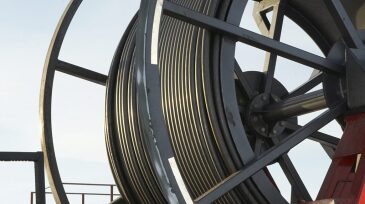
This paper details a trial involving the deployment of a transportable coiled tubing (CT) unit capable of holding 30,000 ft of high-strength 2⅞-in. CT.

This paper presents a novel approach to overcoming extended-reach limitations in coiled tubing interventions by using a split-string system, demonstrating measurable improvements in reach and operational speed in laterals exceeding 3 miles.
-
 Weather conditions aging offshore facilities presented challenges during a monsoon in the South China Sea.
 -
This work will present an object-oriented tracking system that allows CT operators to monitor defects as they evolve over time.
-
Are we really in an industry that is so mature that it is devoid of new thoughts and incapable of generating new concepts to meet the challenges that we face?
-
While increasing coiled-tubing (CT) diameter remains a theoretical option to improve reach, doing so creates logistical challenges.
-
A well in the South China Sea was diagnosed by ultrasonic and temperature logging to have a well-integrity problem, forcing the operator to shut in the well because the leak created a high tubing/casing-annulus pressure.
-
In the southern North Sea, many fields suffer from declining gas production because of reservoir-pressure depletion and associated liquid loading.
-
There has been remarkable growth in the coiled-tubing industry in North America, resulting largely from the shale revolution. This growth attracted numerous new players into the industry, in addition to the capacity additions made by the existing service providers.
-
Horizontal wellbores typically encounter inefficiencies caused by friction during drilling and completion operations.
-
Sticking the coiled tubing (CT) is a major operational risk when performing a well intervention with CT. Stuck-pipe incidents often result in considerable production delay or, in the worst case, loss of the well.