Completions

This edition highlights three offshore technology papers that address a common industry theme: how targeted engineering solutions can reduce uncertainty, shorten operations, and make technically constrained offshore well activities more executable.

Three papers are highlighted as the primary contributions because of their broad industry relevance. They focus on improving formation particle-size characterization, expanding the application of openhole gravel packs in depleted and compartmentalized reservoirs, and advancing the understanding of capillary pressure in sand production.

This paper aims to establish a set of best practices for generating particle-size-distribution data from core samples.
-
 Permian Basin producer Callon Petroleum is attributing its data-driven approach to a routine completions practice to improved proppant placement and higher oil production.
 -
Battlecat Oil & Gas ratcheted up on data, analysis, and technology to successfully develop unproven shale acreage.
-
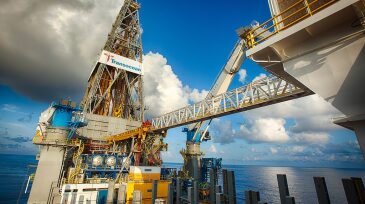
New long-term contracts between offshore drillers and equipment makers reduce downtime and risks associated with key components, from blowout preventers to risers.
-
The unique properties of deepwater formations pose significant challenges to the capabilities of conventional drilling rigs. Using automated drilling equipment, including MPD, efficiency and cost savings can accompany safety.
-
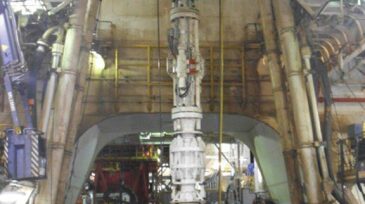
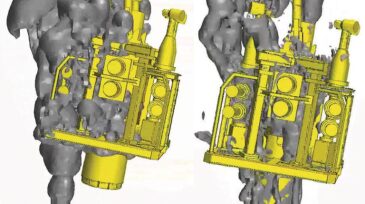
Developing a well-specific subsea-capping contingency plan involves assessing the feasibility of deploying a capping stack from a floating vessel, determining the weight and stability, and performing dynamic-flow simulations of closing the capping stack outlets.
-
This paper summarizes a wide variety of sandstone-acid-stimulation case histories, highlighting aspects such as mechanical conditions and operational practices.
-
Although Saudi Arabia has plenty of sand, it took some ingenuity by Saudi Aramco and Schlumberger to figure out how to use it effectively as proppant.
-
In the keynote speech at the SPE Hydraulic Fracturing Technology Conference, author and founder of the Center for Industrial Progress Alex Epstein explained the moral case for fossil fuels.
-
US drilling and completion companies that were slashing workforces and cannibalizing pumping trucks for parts 6 months ago are now hiring crews and repairing equipment to meet rising demand.
-
Around the top of the list of ways to make hydraulic fracturing more efficient is by expanding the area that is effectively fractured. There is growing evidence of the need for methods to do this that are cost-effective, reliable, and repeatable in wells that vary widely.