Completions

Three papers are highlighted as the primary contributions because of their broad industry relevance. They focus on improving formation particle-size characterization, expanding the application of openhole gravel packs in depleted and compartmentalized reservoirs, and advancing the understanding of capillary pressure in sand production.

This paper aims to establish a set of best practices for generating particle-size-distribution data from core samples.

This paper discusses the successful execution of two openhole gravel-pack completions in two Gulf of Mexico fields with depleted reservoirs.
-
 The Federal Reserve Bank of Dallas’ fourth-quarter energy survey shows that oil prices and geopolitical uncertainty are curbing enthusiasm heading into the new year.
 -
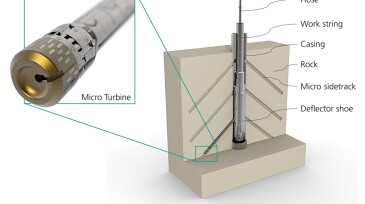
A field test study examines micro turbine drilling in a clay formation that allows steel casing and formation to be drilled in a single operation.
-
Aurora Innovation and Detmar Logistics have inked a deal for 30 autonomous trucks that will begin hauling sand in the region next year.
-
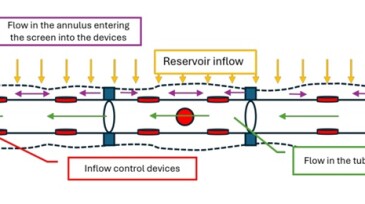
This paper compares various drainage strategies and well completion configurations on the installation of inflow control technology by considering energy efficiency.
-
A new tubing-conveyed tool combines wellbore cleanout with multi-tracer deployment for production diagnostics and reservoir monitoring.
-
Technology developers expect the tight-oil industry to give lightweight proppants another look after the Permian Basin’s biggest operator becomes an adopter.
-
Ranger acquires American Well Services for $90.5 million, adding 39 workover rigs and boosting its fleet by 25%.
-
In this third work in a series, the authors conduct transfer-learning validation with a robust real-field data set for hydraulic fracturing design.
-
This paper describes development of a high-temperature water-based reservoir drill-in fluid using a novel synthetic polymer and customized with optimal chemical concentrations and sized calcium carbonate.
-
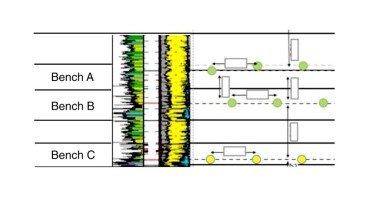
The aim of this study is to incorporate detailed geological, petrophysical, and hydraulic fracturing models to better predict and mitigate the effects of interbench interactions.