Completions

This case study presents a procedure in which the operator compared production from wells with adjusted wettability to a control group, finding that the adjustments resulted in significant improvements in production and reductions in produced water.
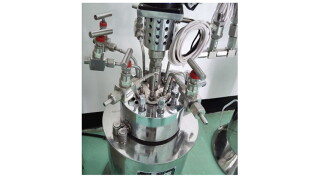
This study aims to systematically assess casing integrity and corrosion risks associated with CO2 injection in oil-recovery operations.
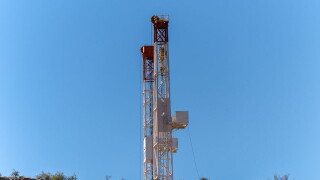
Output is rising fast in the South American shale play and putting Argentina on a course to soon reach 1 million B/D.
-
 The authors of this paper discuss how intelligent completions in the Gulf of Mexico have allowed for increased production, reduction in operating expenses, enhanced overall reservoir recovery, and improved safety and environmental performance.
 -
At SPE’s Permian Basin Energy Conference, operators shared behind-the-scenes details on innovations such as drilling horseshoe wells and trimulfrac completions along with in-basin challenges such as handling produced water.
-
Low flow rates presented a challenge in handling solids from a jetting operation before reinjection. A new cyclone was designed, tested, and installed in just 4 months to manage the suboptimal conditions.
-
This case study uses distributed temperature sensing (DTS) technology to monitor a cemented and plugged well in the Alaska North Slope, highlighting the versatile potential of DTS in long-term monitoring and establishing a workflow that makes the most of that potential.
-
This paper presents a specialized workflow that aims to quantify the severity of condensate banking and subsequently optimize reservoir development strategies for a deep formation in the Permian Basin.
-
A proposed integrated workflow aims to guide prediction and mitigating solutions to reduce casing-deformation risks and improve stimulation efficiency.
-
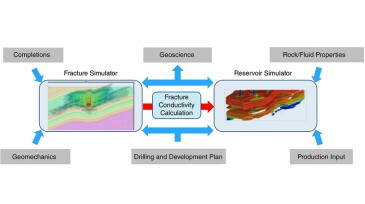
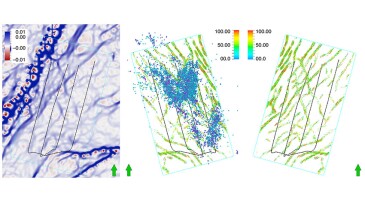
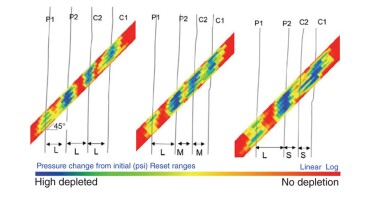
This paper describes numerical modeling studies of fracture-driven interactions using a coupled hydraulic-fracturing-propagation, reservoir-flow, and geomechanics tool.
-
The papers highlighted in this section demonstrate the merging of the theoretical and empirical to solve practical problems, addressing topics such as casing deformation, condensate banking, and mitigation of fracture-driven interactions.
-
This case study outlines a methodology to optimize and control hydraulic fracturing parameters by achieving 100% cluster efficiency and overcoming formation leak-off.
-
We’re thrilled to announce the launch of the 2025 SPE/JPT Drilling and Hydraulic Fracturing Technology Review. This exclusive, official publication will be distributed at three major SPE industry events.