Completions

Three papers are highlighted as the primary contributions because of their broad industry relevance. They focus on improving formation particle-size characterization, expanding the application of openhole gravel packs in depleted and compartmentalized reservoirs, and advancing the understanding of capillary pressure in sand production.

This paper aims to establish a set of best practices for generating particle-size-distribution data from core samples.

This paper discusses the successful execution of two openhole gravel-pack completions in two Gulf of Mexico fields with depleted reservoirs.
-
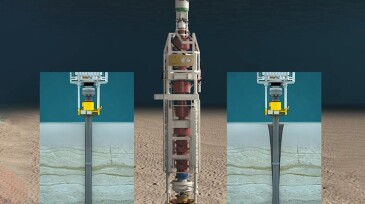
 Over a 10-year period, sensors monitoring the motion and loads near subsea wellheads have been mounted on more than 300 drilling campaigns. Integrity parameters were calculated to assess whether subsea conductors provided the intended amount of support during drilling operations. In several of these campaigns, loss of conductor support due to integrity issues was obse…
 -
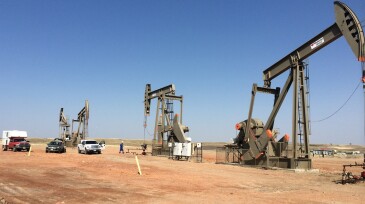
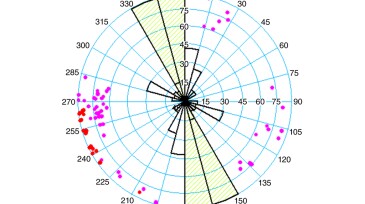
North Dakota's EERC argues that the suboptimal frac jobs of yesterday explain why fracture interactions boost production in the tight-oil play.
-
This paper proposes a multidomain approach to tackle petrophysical and geomechanical aspects of a fracture system governing the carbonate layer of an exploration well in Kuwait to assess producibility and qualification for stimulation.
-
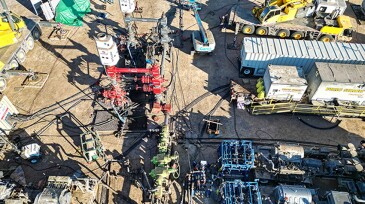
The trend in fracturing designs has been longer stages with more perforation clusters, which save time and money. But there are a couple of companies testing whether shorter is better for production.
-
The US onshore business is looking flat at the moment, though these sorts of predictions are prone to sudden shifts.
-
This paper presents an intelligent tube solution that combines data retrieved by the sensors with the actual resistance of each pipe in the well to allow adjustment of production parameters while ensuring installation safety.
-
This paper describes the material selection methodology and corrosion studies performed in a CO2 sequestration project to optimize well costs and improve overall project economics without jeopardizing the CO2-injector-well integrity.
-
This paper introduces a method using a Bayesian network to aggregate trends detected in time-series data with events identified by natural language processing to improve the accuracy and robustness of kick and lost-circulation detection.
-
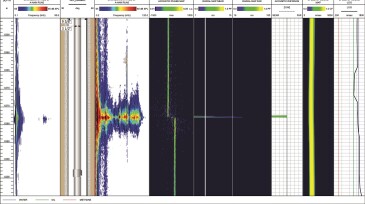
Diagnostics firm TGT launched its newest acoustic platform that it says broadens flow analysis by adding radial distance to the data collected.
-
The US-based drilling contractor and well completions company will combine to form the second-biggest service company in North America.