Completions

Three papers are highlighted as the primary contributions because of their broad industry relevance. They focus on improving formation particle-size characterization, expanding the application of openhole gravel packs in depleted and compartmentalized reservoirs, and advancing the understanding of capillary pressure in sand production.

This paper aims to establish a set of best practices for generating particle-size-distribution data from core samples.

This paper discusses the successful execution of two openhole gravel-pack completions in two Gulf of Mexico fields with depleted reservoirs.
-
 Fluid saturation isn't what it used to be when it comes to unconventional reservoirs. Our guest is among those sharing new research to discuss the shale sector’s changing perspectives on the importance of mobile hydrocarbons vs. immobile hydrocarbons.
 -
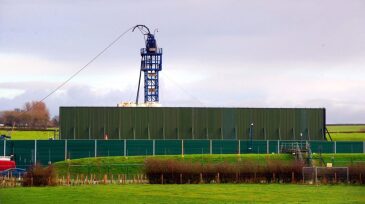
The decision comes 2 months after UK shale operator Cuadrilla Resources halted stimulation work at its Preston New Road site in Lancashire because of a magnitude 2.9 seismic event.
-
Expected to close 31 October, the deal will create one of the largest pressure pumpers in the US.
-
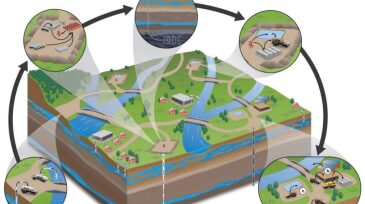
In 2016, the EPA published the findings of a multiyear study, “Hydraulic Fracturing for Oil and Gas: Impacts From the Hydraulic Fracturing Water Cycle on Drinking Water Resources in the United States.” This paper provides a summary of the study’s processes and highlights key finding and limitations.
-
In 2014, a research and development (R&D) project was initiated to increase the life expectancy of Gulf of Mexico (GOM) Miocene and Lower Tertiary water-injection (WI) wells, several of which had suffered a severe loss of injectivity within only a few years of completion.
-
This paper discusses a probabilistic flux and erosion model and work flow that extend the ability to estimate inflow through sand screens on a foot-by-foot basis along the wellbore using the well's completion details, production rate, and reservoir and bottomhole flowing pressures.
-
Measured-pressure approaches have offered much promise for some time but have been slow to reach widespread application. A spate of technical developments, deployments, trials, and applications, however, recently has pushed measured-pressure drilling and its nuanced variants to their full potential.
-
The types of advancements made in real-time drilling data acquisition and processing are now on the doorstep of the North American completions sector. Technology developers are banding together under the umbrella of “coopetition” in a bid to change the way producers fracture tight reservoirs.
-
The authors examine methods of adopting an aggressive approach to optimizing stimulation design to lower the break-even level of operations and evaluate the results.
-
SponsoredIn oil and gas offices around the globe, the term digitalization prompts a range of responses. This white paper outlines a pragmatic approach to digitalization for oil and gas operators, with a focus on drilling and completion.