Completions

Three papers are highlighted as the primary contributions because of their broad industry relevance. They focus on improving formation particle-size characterization, expanding the application of openhole gravel packs in depleted and compartmentalized reservoirs, and advancing the understanding of capillary pressure in sand production.

This paper aims to establish a set of best practices for generating particle-size-distribution data from core samples.

This paper discusses the successful execution of two openhole gravel-pack completions in two Gulf of Mexico fields with depleted reservoirs.
-
 Not all friction reducers are created equal. With dozens of varieties on the market, industry research suggests that oil and gas companies be choosy.
 -
Average production from Bakken wells completed more than 3 years after they were drilled was approximately equal to wells drilled a year before they were put into service, according to a study by the US Energy Information Administration.
-
If you can see it, then maybe you can control it. This sums up the latest quest that the unconventional engineering community embarked upon to get a better understanding of proper well spacing and how fractures really interact.
-
This paper presents a data set involving the pumping of multiple, unique chemical tracers into a single Wolfcamp B fracture stage.
-
The shale sector is studying the results of a 23-well experiment in the southeastern corner of New Mexico to learn what the wider implications might be.
-
A fracturing test site in West Virginia has quietly made a data trove available on the website of the Marcellus Shale Energy and Environment Lab.
-
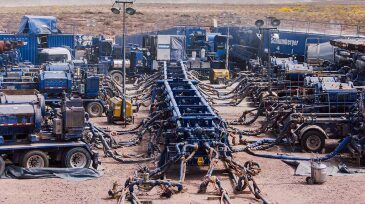
Pressure pumping equipment has been one of the most neglected areas of technological advancement. This has started to change as innovative developers push out new technologies that are slowly modernizing fracturing fleets, delivering major fuel savings, and creating other tangible efficiencies.
-
Findings from Kayrros suggest the average Permian well is both less productive and more expensive than reflected in public data.
-
The green light for Santos Energy’s drilling program in the McArthur Basin comes after a moratorium on hydraulic fracturing in the Northern Territory was lifted in 2018.
-
Getting water is a big issue for those who fracture wells, as is the disposal of it. The number of companies investing in water facilities and reuse, though, remains a minority.