Completions

Three papers are highlighted as the primary contributions because of their broad industry relevance. They focus on improving formation particle-size characterization, expanding the application of openhole gravel packs in depleted and compartmentalized reservoirs, and advancing the understanding of capillary pressure in sand production.

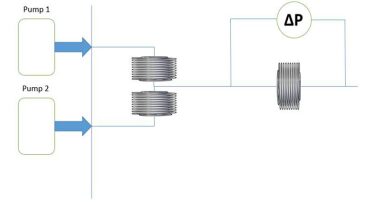
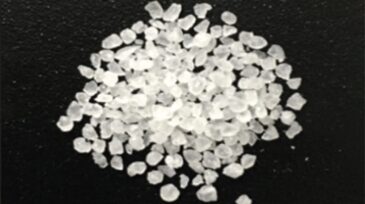
This paper aims to establish a set of best practices for generating particle-size-distribution data from core samples.

This paper discusses the successful execution of two openhole gravel-pack completions in two Gulf of Mexico fields with depleted reservoirs.
-
 In this study, a laboratory analysis was conducted to study the effect of a phosphonate-based scale inhibitor on a mixture of hypersaline Arabian Gulf seawater and formation water under high-temperature/high-pressure conditions.
 -
This paper presents a newly developed model to predict the breakdown pressures in cased and perforated wells.
-
As gas development focuses more on tight and ultratight formations, the challenges to produce economically become diverse and more intense. One main challenge faced while fracturing a well is a high fracture gradient.
-
This paper presents a newly designed triaxial fracturing system and describes a series of experiments that verified the validity of tool-free chemical diversion for multistage fracturing of openhole horizontal wells.
-
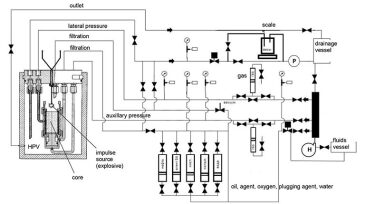
This paper discusses the potential of seismic and seismochemical well simulation in particular within the scope of this recent technology.
-
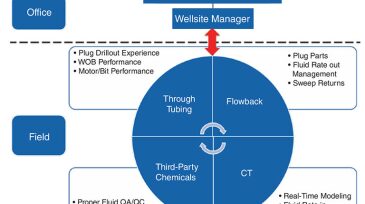
This paper presents a factory-model approach to improving CT drillout performance that has been used successfully for more than 3 years and has become standard practice.
-
The coiled-tubing (CT) industry, like other well-intervention segments, has applied lean philosophies to some aspects of its management, operations, processes, and equipment. When it comes to CT application to specific in-well operations, no two wells are the same.
-
This paper contains a detailed discussion of methods and a software tool that has been developed to generate information that predicts formation-face pressures in real time with the help of live bottomhole-pressure data.
-
The fourth industrial revolution is taking the oil and gas business by storm. Many companies have increased resources for big-data analytics and machine learning. Though no one sees physical oilfield services as in decline, development in these areas may take a back seat to artificial intelligence.
-
In this paper, the authors study the stress status of CT string held by gripper blocks, the axial force distribution of gripper blocks, and the longitudinal resonance of CT strings in vertical wells.