Data & Analytics

Shell has demonstrated drone-in-a-box operations from its Mars floating production unit, becoming the first operator in the region to secure FAA approval for self-approved offshore beyond-visual-line-of-sight flights. JPT Senior Technology Editor Jennifer Pallanich visited Shell Technology Center Houston to see the system in action.

Panelists at the SPE Subsea Well Intervention Symposium discussed where AI is delivering value today, where risks remain, and how engineers can best determine its usefulness.

As digital technologies become commonplace, industry leaders say core engineering knowledge remains essential for making informed decisions and avoiding costly mistakes.
-
 AGI stands for artificial general intelligence, a hypothetical computer program that can perform intellectual tasks as well as, or better than, a human. AGI will make today’s most advanced AIs look like pocket calculators.
 -
Dubbed the technology of the decade, AI has been the catchphrase on every futurist’s tongue. From customer support chatbots to smart assistants, AI has begun to transform numerous industry verticals.
-
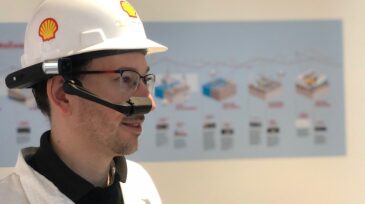
This digital deal is helping to make augmented reality a new reality for oil and gas operations.
-
Called Eelume, the underwater drone will perform subsea inspection, maintenance, and repair work.
-
In the expanding landscape of oilfield data analytics, analysts must trust their data. Some experts say that trust in the data is as important, if not more important, than the data’s accuracy.
-
Fed by big data loads from big operators, a university consortium and software firm are each working to make upstream data access as quick and easy as a Google search.
-
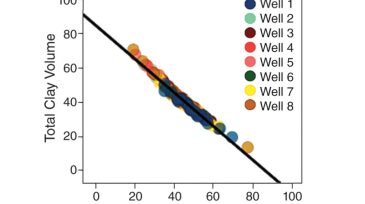
This paper demonstrates how engineers can take advantage of their most-detailed completions and geomechanical data by identifying trends arising from past detailed treatment analyses.
-
The operator piloted a new well-completion design combining inflow-control valves (ICVs) in the shallow reservoir and inflow-control devices (ICDs) in the deeper reservoir, both deployed in a water-injector well for the first time in the company’s experience.
-
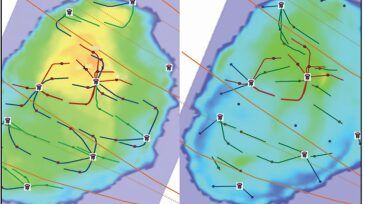
Machine-learning methods have gained tremendous attention in the last decade. The underlying idea behind machine learning is that computers can identify patterns and learn from data with minimal human intervention. This is not very different from the notion of automatic history matching.
-
In collaboration with Stanford University and Brown University, Google explores how existing knowledge in an organization can be used as noisier, higher-level supervision—or, as it is often termed, weak supervision—to quickly label large training data sets.