Data & Analytics

Shell has demonstrated drone-in-a-box operations from its Mars floating production unit, becoming the first operator in the region to secure FAA approval for self-approved offshore beyond-visual-line-of-sight flights. JPT Senior Technology Editor Jennifer Pallanich visited Shell Technology Center Houston to see the system in action.

Panelists at the SPE Subsea Well Intervention Symposium discussed where AI is delivering value today, where risks remain, and how engineers can best determine its usefulness.

As digital technologies become commonplace, industry leaders say core engineering knowledge remains essential for making informed decisions and avoiding costly mistakes.
-
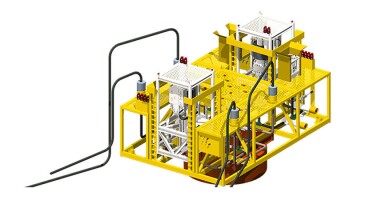
 By closely monitoring its subsea boosting system, Shell extended maintenance intervals and safely postponed pump replacement at its ultradeepwater Stones field.
 -
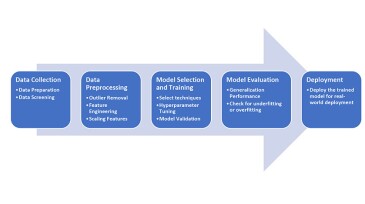
This study integrates physics-based constraints into machine-learning models, thereby improving their predictive accuracy and robustness.
-
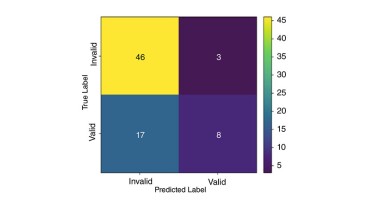
This paper introduces a machine-learning approach that integrates well-logging data to enhance depth selection, thereby increasing the likelihood of obtaining accurate and valuable formation-pressure results.
-
This study aims to use machine-learning techniques to predict well logs by analyzing mud-log and logging-while-drilling data.
-
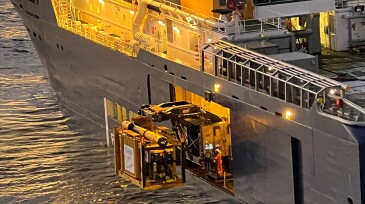
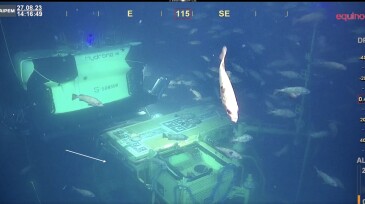
With the right infrastructure and interoperability, subsea resident robotics could unlock more frequent, cost-effective inspections—and a new standard for offshore efficiency.
-
Emerging solutions could solve current subsea pain points, while a new taxonomy system could clarify the capabilities of the expanding domain of underwater vehicles.
-
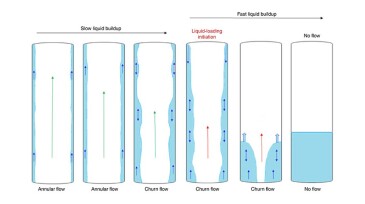
This work introduces a fast, methodical approach to detect liquid loading using easily available field data while avoiding traditional assumptions and to determine critical gas rates directly from field data.
-
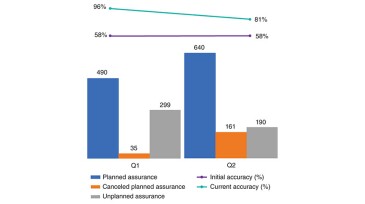
This paper describes a tool that complements predictive analytics by evaluating top health, safety, and environment risks and recommends risk-management-based assurance intervention.
-
Traditionally, the drilling industry has relied on high-fidelity thermal simulators to predict downhole temperature for different operational scenarios. Though accurate, these models are too slow for real-time applications. To overcome this limitation, a deep-learning solution is proposed that enables fast, accurate prediction of downhole temperatures under a wide ran…
-
This article explores how the pursuit of a "perfect" reservoir model may be hindering progress in an industry increasingly shaped by data, uncertainty, and AI.