Data & Analytics

Shell has demonstrated drone-in-a-box operations from its Mars floating production unit, becoming the first operator in the region to secure FAA approval for self-approved offshore beyond-visual-line-of-sight flights. JPT Senior Technology Editor Jennifer Pallanich visited Shell Technology Center Houston to see the system in action.

Panelists at the SPE Subsea Well Intervention Symposium discussed where AI is delivering value today, where risks remain, and how engineers can best determine its usefulness.

As digital technologies become commonplace, industry leaders say core engineering knowledge remains essential for making informed decisions and avoiding costly mistakes.
-
 The robot company said it plans to integrate 3D at Depth’s LiDAR inspection technology after the all-stock acquisition.
 -
The authors of this paper describe a procedure that enables fast reconstruction of the entire production data set with multiple missing sections in different variables.
-
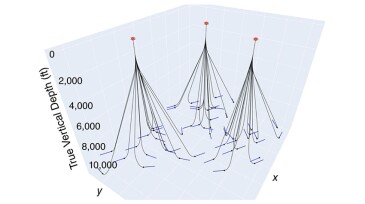
This paper presents an approach to optimize the location of wellhead towers using an algorithm based on multiple parameters related to well cost.
-
This paper presents a physics-assisted deep-learning model to facilitate transfer learning in unconventional reservoirs by integrating the complementary strengths of physics-based and data-driven predictive models.
-
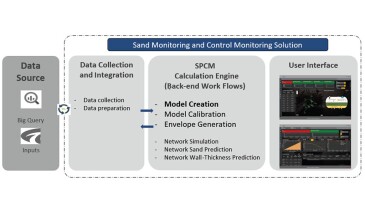
The authors of this paper propose an automated approach to sand prediction and control monitoring that improved operational efficiency by reducing time spent on manual analysis and the decision-making process in a Myanmar field.
-
We must admit that the oil field is still in the early days of its digital journey. It’s time to give serious thought to the expectation/reality gap, the cultural differences between the way we’ve always done things and the way that digital is changing us, and the pain points that may trip us up unless we’re careful.
-
The promise of DataOps, the application of agile DevOps methods and tools to data engineering, is compelling even though the term has progressed through the hype cycle for years and, for many, little impact has been achieved. The potential remains strong, though. If impact is elusive, there are likely two main causes.
-
Machine learning has been shown to have a promising role in oil and gas explorations in recent years. Among the applications, determining a proper location for injection and production wells along with their optimal operating conditions is a complex problem.
-
The partnership plans to develop an overlying software suite, Data Mesh, to consolidate data from various sources and increase data-access efficiency.
-
A recently signed contract lines the company up to provide autonomous ocean robots for inspection of the oil giant’s subsea field developments in the Gulf of Mexico.