Data & Analytics

Shell has demonstrated drone-in-a-box operations from its Mars floating production unit, becoming the first operator in the region to secure FAA approval for self-approved offshore beyond-visual-line-of-sight flights. JPT Senior Technology Editor Jennifer Pallanich visited Shell Technology Center Houston to see the system in action.

Panelists at the SPE Subsea Well Intervention Symposium discussed where AI is delivering value today, where risks remain, and how engineers can best determine its usefulness.

As digital technologies become commonplace, industry leaders say core engineering knowledge remains essential for making informed decisions and avoiding costly mistakes.
-
 Accenture research suggests that only 12% of companies have advanced their AI maturity enough to achieve superior growth and business transformation. These companies are "AI Achievers" and, on average, attribute 30% of their total revenue to AI.
 -
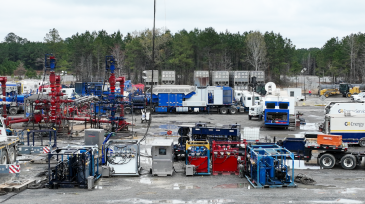
New automated technology is making it possible to run pressure pumps for days on end.
-
SponsoredWell-monitoring technology gives oil companies the data and insights to boost production and derive maximum value from oil and gas wells.
-
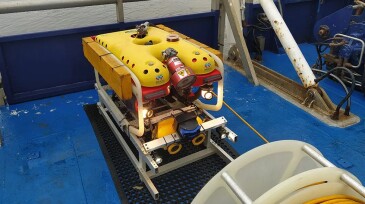
Researchers from the Offshore Robotics for Certification of Assets Hub teamed with EDF Renewables to use a modified remotely operated vehicle to conduct what they say is the first autonomous underwater inspection of wind farm foundations.
-
The Internet of Things company plans to broaden its reach into the oil and gas industry with its acquisition of Hiber.
-
Eighteen energy corporations have agreed to cooperate to strengthen infrastructure across the industry ecosystem. The pledge was announced during the World Economic Forum's 2022 annual meeting.
-
The suite of tools includes a digital platform for sharing emissions data, an agreed set of definitions that nails down what different terms mean, a single set of metadata definitions, and an API through which users can access data. When used together, these tools provide an integrated perspective on what emissions are coming from where.
-
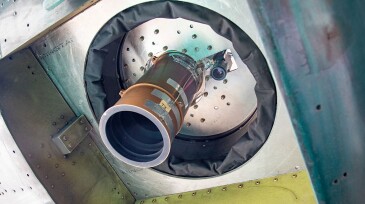
A trio of new satellites that use infrared sensor technology are now flying around the Earth at a speed faster than 4 miles per second.
-
Trafigura, a group of physical commodity trading companies, and Palantir Technologies announced their intent to develop a platform to calculate carbon intensity, combining the efforts of trading and digital technology to account for Scope 3 emissions. The aim is to increase transparency of life-cycle emissions and to provide benchmarking against other market participa…
-
The fast-growing software firm was founded by former oil and gas professionals who wanted to disrupt traditional reservoir economics software and redefine workflows.