Data & Analytics

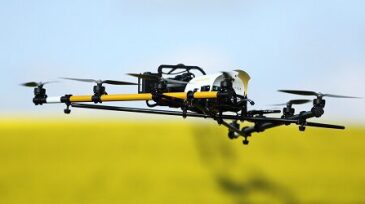
Shell has demonstrated drone-in-a-box operations from its Mars floating production unit, becoming the first operator in the region to secure FAA approval for self-approved offshore beyond-visual-line-of-sight flights. JPT Senior Technology Editor Jennifer Pallanich visited Shell Technology Center Houston to see the system in action.

Panelists at the SPE Subsea Well Intervention Symposium discussed where AI is delivering value today, where risks remain, and how engineers can best determine its usefulness.

As digital technologies become commonplace, industry leaders say core engineering knowledge remains essential for making informed decisions and avoiding costly mistakes.
-
 In response to increasing demand for remote offshore services, Fugro has completed the Middle East’s first fully autonomous geophysical shallow-water route survey.
 -
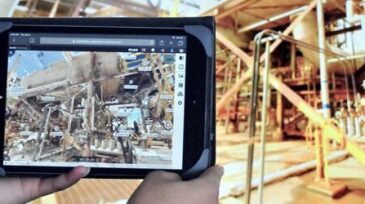
iHawk, Cyberhawk’s cloud-based asset visualization software, will become Shell’s next-generation visualization software platform for all onshore, offshore, and subsea assets, as well as all global construction projects.
-
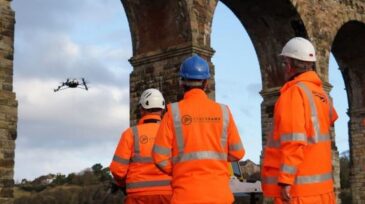
The contract continues the two companies’ 8-year working relationship; in 2012, they performed the world’s-first underdeck inspection.
-
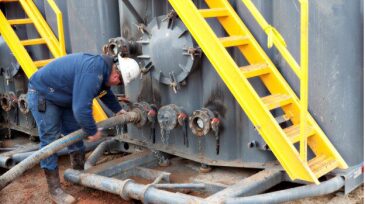
A test showing that it’s possible to automate the billing process for produced water hauling has opened the door for tracking a wide range of field activities. The industry downturn brought on by COVID-19 has motivated big companies to test practical applications sooner.
-
Oil and gas companies are awash with data. Engineers and geoscientists struggle to work with massive amounts of unstructured, yet valuable, data because it is not organized, is difficult to manage, and may not be complete. New work flows now allow this data to be organized successfully.
-
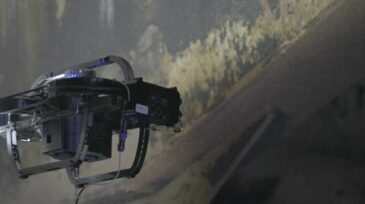
A recent test proved the feasibility of using LiDAR on remote-controlled drones to create 3D maps of the inside of tanks, increasing the safety and efficiency of inspections.
-
Machine learning enables fast, cost-effective, and accurate methane emissions detection in remote areas.
-
The aerospace giant is launching a new business unit to cash in on the autonomous aviation market. It will act as a systems integrator for all Honeywell products and services that could be used in this industry.
-
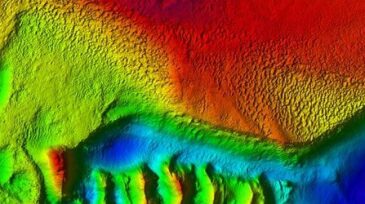
Three-dimensional seismic technology helped unlock more subsurface secrets for oil and gas operators. Now, 3D technology can be used in scanning, a cutting-edge technology that engineers can use to plan upgrades to oil and gas assets virtually.
-
Artificial intelligence just seems to get smarter and smarter. But some of the improvement comes from tweaks rather than the core innovations their inventors claim—and some of the gains may not exist at all, says Davis Blalock, a computer science graduate student at MIT.