Data & Analytics

Switching from continuous circulation to cyclic huff-‘n’-puff operation in enhanced geothermal systems can significantly delay thermal breakthrough, sustain higher production temperatures, and improve long-term economic performance.

The two companies say they plan to work together to use agentic AI to increase the capabilities of technical experts.

This article is the first in a Q&A series from the SPE Methane Emissions Management Technical Section (MEMTS) on methane intelligence and how oil and gas teams translate emissions data into credible decisions and measurable reductions.
-
 The artificial-intelligence application BHC3 Reliability provides early warning of production downtime and process risk to improve operational productivity, efficiency, and safety.
 -
The company has released new technology for cloud data lakes. Can the company take data in relatively slow cloud object storage and make queries against it faster?
-
Whether thinking about managing oil and gas or other infrastructure facilities or considering industrial efficiency, you may be pondering how the Internet of things can be used. Forward-thinking strategies include not just staying on top of regulatory changes but also influencing them.
-
Technology startups are breathing new life into an old industry with advanced software and emerging chemistry solutions. Learn about some of the names earning the most attention from the industry's venture capital groups.
-
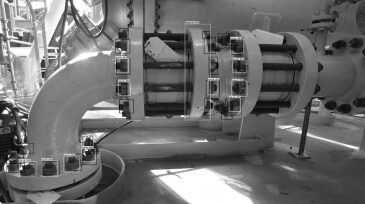
Using machine learning (ML), image recognition, and object detection, the use of ML on algorithms to recognize objects and describe their condition were investigated—offering new possibilities for performing inspection and data gathering to evaluate the technical condition of oil and gas assets.
-
The combination of digital technologies will enable Chevron—and, eventually, other companies—to process, visualize, interpret, and glean insights from multiple data sources, the companies said.
-
The planned collaboration is expected to provide analytics-ready data from IHS Markit that would be directly accessible from the GAIA platform.
-
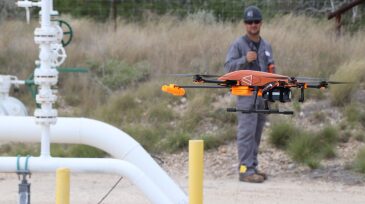
The pilot used sensor technology originally deployed by NASA for the Mars Curiosity Rover to collect methane emissions data live-streamed from a drone. BP said it plans to deploy the technology to all of its North Sea assets, including ETAP and Glen Lyon, in 2020.
-
Equinor Technology Ventures and OGCI Climate Investments have agreed to back the tech developer, which integrates its SeekIR miniature gas sensors onto drones to detect, localize, and quantify carbon emissions.
-
Blending smart-proxy models with data-driven models to create hybrid models is not always the best idea for physics- and engineering-related applications.