Data & Analytics
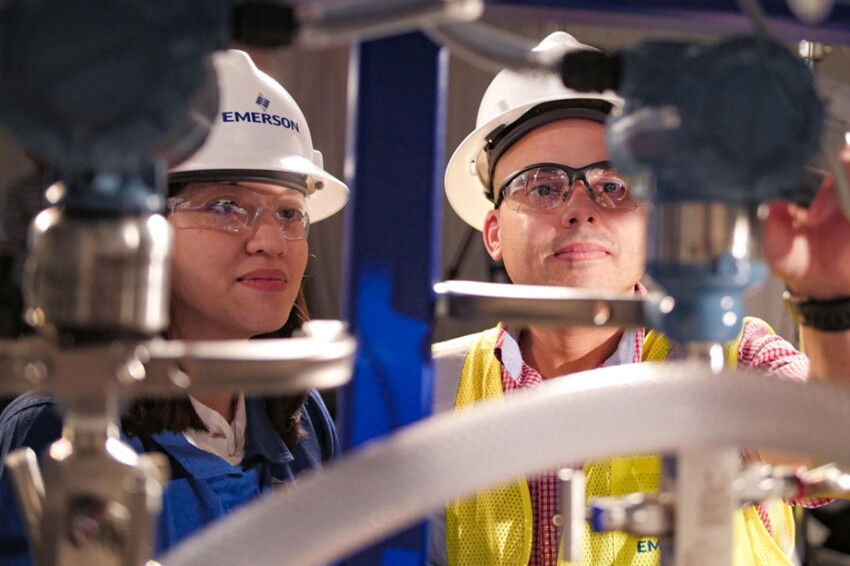
Aramco says it has saved $770 million over the past 3 years from the $70 million it has invested over the same period in corrosion management technologies.

The deal adds physics-based reservoir modeling and real-time decision workflows to SLB’s digital portfolio.

The paper presents the design and successful field deployment of the first closed-loop hydraulic fracturing program.
-
 Visualization technology has played a key role in reducing operational expenditure (OPEX) and improving collaboration, thus maximizing uptime across the industry throughout the asset life cycle.
 -
A recently released report predicted that IoT networks will not take up as much of the overall market share as previously anticipated.
-
IoT has become a popular phrase in various industries. For upstream oil and gas operators, an IoT infrastructure may present an opportunity improve quality control on their projects, potentially reducing costs and increasing production.
-
AUVs have evolved from an emerging technology with niche uses to a viable solution and an established part of operations in various marine sectors. Douglas-Westwood’s AUV Market Forecast considers the prospective demand for AUVs in the commercial, military and research sectors over the next 5 years.
-
Big ideas for digital intelligence in Oil and Gas are being discussed at ATCE.
-
Optimization of maintenance costs is among operators’ main concerns in the search for operational efficiency, safety, and asset availability. The ability to predict critical failures emerges as a key factor, especially when reducing logistics costs is mandatory.
-
The difficulty in applying traditional reservoir-simulation and -modeling techniques for unconventional-reservoir forecasting is often related to the systematic time variations in production-decline rates. This paper proposes a nonparametric statistical approach to resolve this difficulty.
-
Managing an unconventional asset requires the proper analysis of large amounts of data. How can unconventional asset operators utilize data processing technologies commonly used in other industries?
-
The oil and gas industry is facing an invasion of data analytics startups who saw a wide-open gap in the market a few years ago when talk of big data first began.
-
A newcomer in the arena of oilfield market research has set an ambitiously high bar for itself: to speed up the oil and gas industry’s widely acknowledged and painfully slow rate of technology adoption.