Data & Analytics

Schneider Electric says the deal advances its vision of creating intelligent industrial ecosystems that connect physical assets with digital insights across the asset life cycle.
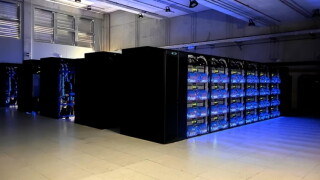
With the latest addition, the Italian major’s computational capacity passes the exaflop threshold, making the firm the world’s leading company by computing power in the new TOP500 global ranking.

This case study describes how edge computing and industrial internet of things platforms were deployed to automate and optimize production operations across four distinct basins.
-
 The two main takeaways from this paper: First, it underscores the difference between explainability and interpretability and presents why the former may be problematic. Second, it provides some great pointers for creating truly interpretable models.
 -
To make sure deep learning meets its promise, we need to reorient research away from state-of-the-art accuracy and toward state-of-the-art efficiency. We need to ask if models enable the largest number of people to iterate as fast as possible using the fewest amount of resources on the most devices.
-
The media is often tempted to report each tiny new advance in a field, be it artificial intelligence or nanotechnology, as a great triumph that will soon fundamentally alter our world. Occasionally, of course, new discoveries are underreported.
-
In an increasingly data-dependent sector, oil and gas companies need to scale up their use of technology across the enterprise rapidly. Success will involve reframing the CIO’s role in driving not only digital transformation but also business outcomes.
-
Unless we work together to resolve the underlying causes of data problems, we will continue to struggle with the time and effort needed to get the foundations of data preparedness sorted out. That means that industry must accept that data is strategic rather than tactical.
-
Rather than waiting for a dominant player to emerge, the oil and gas industry is at a point in its journey with blockchain where it makes sense to actively start working toward common architectures and standards in the blockchain domain.
-
The complete paper describes the development of a smart robotic inspection system for noncontact condition monitoring and fault detection in buried pipelines.
-
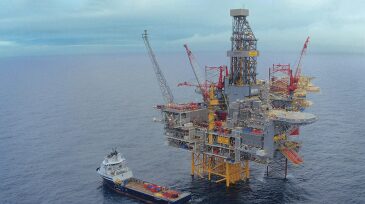
A proving ground for the use of digital twins has emerged in the North Sea. There, operators Total, Aker BP, and Shell have each developed and deployed twins that they expect to pay big dividends.
-
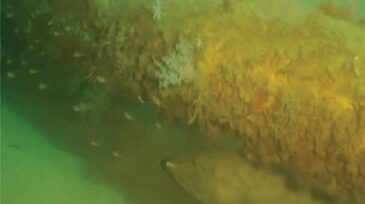
The complete paper describes the potential global scientific value of video and other data collected by ROVs.
-
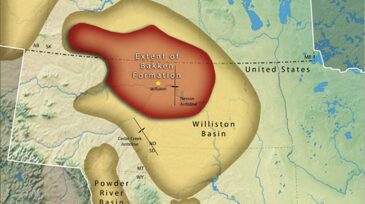
Multistage horizontal well designs were first implemented in the Bakken in 2007. Since then, more than 12,000 wells have been completed in either the Middle Bakken or Three Forks zones.