Data & Analytics

This research focuses on combining physics-based expert rules with machine learning to improve the detection of failure-related events in electrical submersible pumps.

A combination of physics principles and machine-learning techniques is used in this work to develop a virtual flowmeter for oil-production optimization in electrical-submersible-pump-lifted oil wells, resulting in reliable generalization.

This paper presents the deployment of an artificial intelligence-enabled autonomous gas lift optimization system, integrating real-time centralized advanced process control with cloud-based analytics to enhance artificial gas lift performance in producer wells.
-
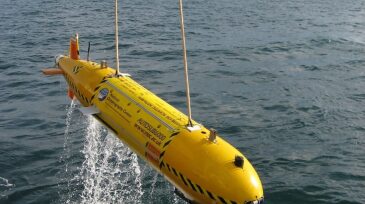
 Funded by a €10.6 million grant from the European Union’s Horizon 2020 program, the ambitious project will, for the first time, undertake an oceanwide approach to understanding the factors that control the distribution, stability, and vulnerability of deep-sea ecosystems.
 -
Marathon Oil says its shale fields are producing more oil and gas with less hands-on work from company personnel thanks to a growing arsenal of digital technologies and workflows.
-
Drones are becoming an important tool for energy companies looking to improve on-site safety and operational efficiencies, and the industry is looking for the best way to maximize their value. What are some the challenges in getting these programs off the ground?
-
The oil and gas industry already lives on the edge when it comes to the remote and often inhospitable geographic locations that it operates in, but now it is moving its computing to the edge to gain valuable business insights that can increase operational efficiency and profitability.
-
The Independent Project Analysis recently reached out to its clients to understand why digitalization tools are so burdensome for projects organizations to implement.
-
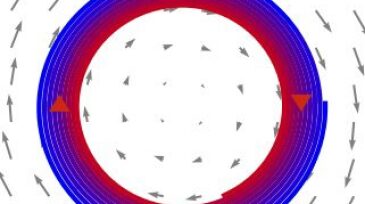
Hamiltonian neural networks draw inspiration from Hamiltonian mechanics, a branch of physics concerned with conservation laws and invariances. By construction, these models learn conservation laws from data, revealing major advantages over regular neural networks on a variety of physics problems.
-
Schlumberger introduced the GAIA digital exploration platform, which it says enables exploration teams to rapidly discover and access basin-scale data and manage their exploration opportunities.
-
Researchers at the University of Massachusetts, Amherst, performed a life-cycle assessment for training several common large AI models. They found that the process can emit more than 626,000 lbm of carbon dioxide equivalent—nearly five times the lifetime emissions of the average American car.
-
DSDE recently spoke with Bill Vass, vice president of engineering for Amazon Web Services, about his observations on the oil and gas industry’s digital efforts and Amazon’s aggressive growth in the business.
-
Random Forest and Neural Network are the two widely used machine-learning algorithms. What is the difference between the two approaches? When should one use Neural Network or Random Forest?