Data & Analytics

This research focuses on combining physics-based expert rules with machine learning to improve the detection of failure-related events in electrical submersible pumps.

A combination of physics principles and machine-learning techniques is used in this work to develop a virtual flowmeter for oil-production optimization in electrical-submersible-pump-lifted oil wells, resulting in reliable generalization.

This paper presents the deployment of an artificial intelligence-enabled autonomous gas lift optimization system, integrating real-time centralized advanced process control with cloud-based analytics to enhance artificial gas lift performance in producer wells.
-
 The software that the duo is working on aims to optimize and automate the moving of drilling rigs.
 -
Sustainability data management is a relatively new discipline that requires a unique set of tools, processes, and procedures to meet corporate demands.
-
Initial forays into using digital twins across its major fields has inspired the multinational hydrocarbon exploration and production company to further adopt the technology across its entire portfolio.
-
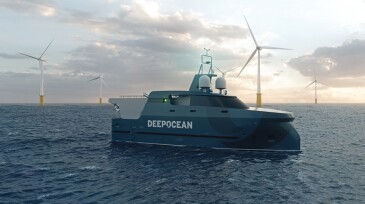
The USV will be equipped with a remotely operated vehicle that is capable of operating in water up to 1500 m deep and tools to perform subsea operations.
-
The Abu Dhabi National Oil Company said it plans to deploy uncrewed aerial vehicles equipped with the latest imaging technology for detailed inspections of site assets and infrastructure.
-
The robot company said it plans to integrate 3D at Depth’s LiDAR inspection technology after the all-stock acquisition.
-
We must admit that the oil field is still in the early days of its digital journey. It’s time to give serious thought to the expectation/reality gap, the cultural differences between the way we’ve always done things and the way that digital is changing us, and the pain points that may trip us up unless we’re careful.
-
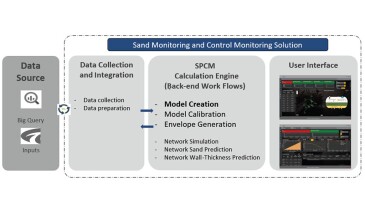
The authors of this paper propose an automated approach to sand prediction and control monitoring that improved operational efficiency by reducing time spent on manual analysis and the decision-making process in a Myanmar field.
-
The authors of this paper describe a procedure that enables fast reconstruction of the entire production data set with multiple missing sections in different variables.
-
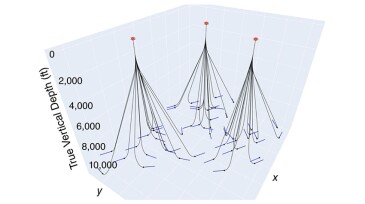
This paper presents an approach to optimize the location of wellhead towers using an algorithm based on multiple parameters related to well cost.