Data & Analytics

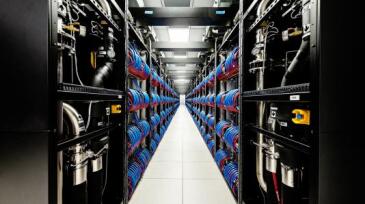
Working with Dell Technologies and NVIDIA, the French supermajor is targeting improved seismic processing and artificial intelligence applications.

A discussion at the inaugural executive breakfast convened by the SPE Data Science and Engineering Analytics Technical Section, held alongside CERAWeek by S&P Global and powered by Black & Veatch, tackled the challenge of value creation from artificial intelligence in the energy industry.

AI‑driven data center growth is straining US power grids and accelerating interest in enhanced geothermal systems as a scalable, low‑carbon solution.
-
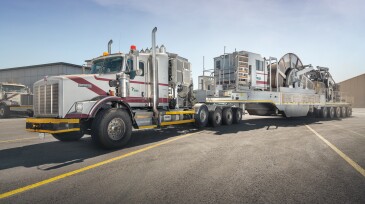
 SponsoredTAQA is commencing its journey into the year 2024 with the successful launching of many innovative coiled tubing technologies and solutions, technologies that will transform the nature of well intervention operations into a new era. Read this article and dive into the high-tier coiled tubing technology offerings from TAQA.
 -
The new system at the US Department of Energy’s Argonne National Laboratory achieved more than a quintillion calculations per second.
-
The companies are combining their technologies in an effort to help upstream oil and gas operators monitor, report, and reduce emissions.
-
The world's largest oil and gas company has selected French firm Pasqal to provide it with a 200-qubit quantum computer.
-
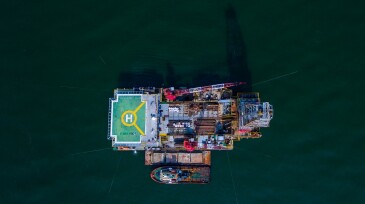
With the growing reliability of uncrewed aircraft, oil companies are now eager to have offshore rigs supplied in a more systematic and autonomous way. So, why haven’t we heard more about using uncrewed craft?
-
The Saudi Arabian major is finding new ways of using drones to help improve the safety, efficiency, and environmental performance of its operations.
-
A report from GlobalData shows how digital twins—digital representations of physical assets, systems, people, or processes—are increasingly helping oil and gas companies throughout the life cycle of their operations.
-
The partnership aims to use artificial intelligence and advanced robotics to accelerate the adoption of technologies for predictive maintenance.
-
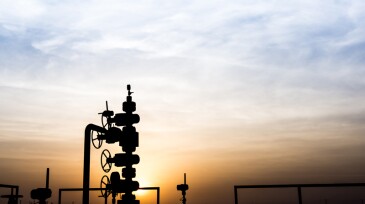
SponsoredThe oil and gas industry makes up 40% of all anthropogenic methane emissions because of leaks at the wellsite. Fortunately, the well pad is often where methane emissions are easiest to address through a mitigation strategy of optimized maintenance and process control—all enabled by instrumentation insight.
-
Heightened focus on methane emissions management spurs a new conceptual framework to aid in determining the duration of detected methane emissions, data that may be useful to stakeholders responsible for measurement-informed emission protocols.