Data & Analytics

Working with Dell Technologies and NVIDIA, the French supermajor is targeting improved seismic processing and artificial intelligence applications.

A discussion at the inaugural executive breakfast convened by the SPE Data Science and Engineering Analytics Technical Section, held alongside CERAWeek by S&P Global and powered by Black & Veatch, tackled the challenge of value creation from artificial intelligence in the energy industry.

AI‑driven data center growth is straining US power grids and accelerating interest in enhanced geothermal systems as a scalable, low‑carbon solution.
-
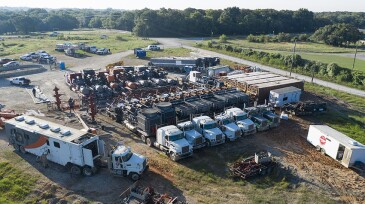
 Operators tell an audience at the Unconventional Resources Technology Conference how a hybrid expandable liner system and machine-learning-based analysis improve the bottom line.
 -
This paper presents efforts to reduce greenhouse-gas emissions and increase energy efficiency through the use of a real-time monitoring tool on exploration and production operated assets.
-
Machine learning is refining gas lift production optimization with scalable automated workflow.
-
The Permian’s produced-water challenge presents an opportunity for innovation to pave the way toward a more sustainable future for the industry.
-
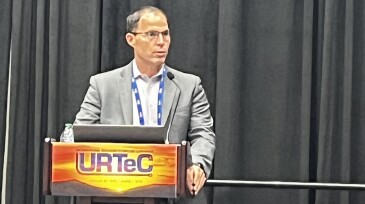
The chief operating officer of Chesapeake Energy tells the Unconventional Resources Technology Conference that small wins can pave the path to big achievements.
-
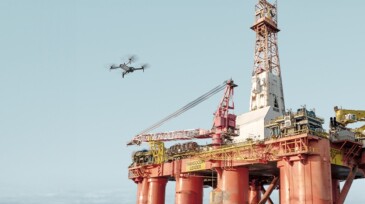
Using autonomous systems creates efficiencies, but, even more critically, it also allows engineers to be engineers.
-
The Norwegian major agrees to use Seeq’s software in an effort to maximize production and enhance efficiency across its assets.
-
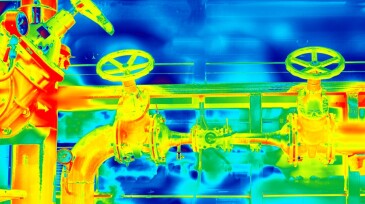
This article explores the implementation of artificial intelligence vision for leak monitoring automation in the oil and gas industry and its role in improving safety standards, operational efficiency, and environmental performance.
-
This paper investigates the use of machine learning to rapidly predict the solutions of a high-fidelity, complex physics model using a simpler physics model.
-
This study proposes a hybrid model that combines the capacitance/resistance model, a machine-learning model, and an oil model to assess and optimize water-alternating-gas (WAG) injectors in a carbonate field.